<?xml version="1.0" encoding="UTF-8"?><rss version="2.0"
	xmlns:content="http://purl.org/rss/1.0/modules/content/"
	xmlns:wfw="http://wellformedweb.org/CommentAPI/"
	xmlns:dc="http://purl.org/dc/elements/1.1/"
	xmlns:atom="http://www.w3.org/2005/Atom"
	xmlns:sy="http://purl.org/rss/1.0/modules/syndication/"
	xmlns:slash="http://purl.org/rss/1.0/modules/slash/"
	>

<channel>
	<title>Createquity.Createquity.</title>
	<atom:link href="https://createquity.com/author/katieingersoll/feed/" rel="self" type="application/rss+xml" />
	<link>https://createquity.com</link>
	<description>The most important issues in the arts...and what we can do about them.</description>
	<lastBuildDate>Wed, 15 Jul 2020 20:17:39 +0000</lastBuildDate>
	<language>en-US</language>
	<sy:updatePeriod>hourly</sy:updatePeriod>
	<sy:updateFrequency>1</sy:updateFrequency>
	<generator>https://wordpress.org/?v=6.9.4</generator>
	<item>
		<title>What Makes Arts Organizations Civically Engaged?</title>
		<link>https://createquity.com/2017/10/what-makes-arts-organizations-civically-engaged/</link>
		<comments>https://createquity.com/2017/10/what-makes-arts-organizations-civically-engaged/#respond</comments>
		<pubDate>Sun, 01 Oct 2017 19:48:55 +0000</pubDate>
		<dc:creator><![CDATA[Jack Crager and Katie Ingersoll]]></dc:creator>
				<category><![CDATA[Research Spotlight]]></category>
		<category><![CDATA[audience engagement]]></category>
		<category><![CDATA[capacity to create change]]></category>
		<category><![CDATA[civic engagement]]></category>
		<category><![CDATA[Createquity Arts Research Prize]]></category>
		<category><![CDATA[nonprofit sector]]></category>

		<guid isPermaLink="false">https://createquity.com/?p=10356</guid>
		<description><![CDATA[A nationwide study indicates that peer networks and mission identity are key.]]></description>
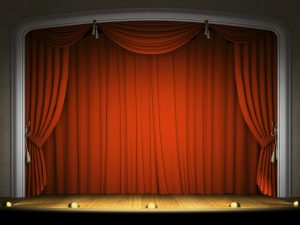
				<content:encoded><![CDATA[<div id="attachment_10357" style="width: 570px" class="wp-caption aligncenter"><img fetchpriority="high" decoding="async" aria-describedby="caption-attachment-10357" class="wp-image-10357" src="https://createquity.com/wp-content/uploads/2017/09/stage-300x225.jpg" alt="" width="560" height="420" srcset="https://createquity.com/wp-content/uploads/2017/09/stage-300x225.jpg 300w, https://createquity.com/wp-content/uploads/2017/09/stage-768x576.jpg 768w, https://createquity.com/wp-content/uploads/2017/09/stage-1024x768.jpg 1024w, https://createquity.com/wp-content/uploads/2017/09/stage.jpg 1600w" sizes="(max-width: 560px) 100vw, 560px" /><p id="caption-attachment-10357" class="wp-caption-text">Empty stage in expectation of performance, by Flickr user renewleeds</p></div>
<p>If all the world’s a stage, who can compete with Broadway? While gathering research as a doctoral student at Rutgers University in Newark, NJ, Mirae Kim interviewed numerous arts organizations about funding issues. She spotted a pattern among local nonprofit venues: “Many theaters in New Jersey mentioned their need to compete against Broadway theaters in New York City – which perfectly made sense since they are only about ten to 20 miles away from Broadway,” Kim recalls. “They mentioned they cannot compete against Broadway theaters in the traditional way because of the different financial sizes, so several of them highlighted their community basis as a way of differentiating themselves from ‘commercial’ theaters.”</p>
<p>Kim’s curiosity about this distinction led to an intensive research study – <a href="http://journals.sagepub.com/doi/abs/10.1177/0899764016646473">Characteristics of Civically Engaged Nonprofit Arts Organizations: The Results of a National Survey</a> – which she completed over a three-year period while working as an assistant professor at the University of Missouri’s Harry S Truman School of Public Affairs. She broadened her inquiry to survey myriad nonprofit arts organizations throughout the United States, focusing on what differentiates the groups with a 501(c)(3) status from commercially driven ventures.</p>
<p>“It intrigued me whether the need for survival prompted nonprofits to highlight their civic engagement role – or if there were other reasons,” Kim explains. “One of the findings I didn&#8217;t expect was the role of associations and collaboratives in encouraging nonprofit arts organizations to recognize ‘civic and community engagement’ as one of the critical factors they should embody.”</p>
<h2><b>A Winning Formula</b></h2>
<p>Another unexpected outcome for Kim: her study won the inaugural <a href="https://createquity.com/2017/08/createquity-arts-research-prize-winner/">Createquity Arts Research Prize</a>, entitling her to a $500 cash award and a platform for sharing her work with a wider audience. In our review of more than 500 arts research studies for the Research Prize, Kim’s publication rose to the top for several reasons: a high-level methodological design, the use of previously validated survey instruments, a widely representative sample, and a topic with resonance in the arts community. This work exemplifies Createquity’s interest in encouraging arts institutions to <a href="https://createquity.com/issue/capacity/">prioritize community needs</a> ahead of their own prosperity.</p>
<p>First published in 2016 in the Nonprofit and Voluntary Sector Quarterly, Kim’s article includes and draws on a wide-ranging literature review. The study relies on a varied and robust combination of instruments and data sources including:</p>
<ul>
<li>structured interviews with 21 nonprofit arts organization directors</li>
<li>a survey of 900+ arts organizations, with questions based on the qualitative interview results</li>
<li>financial data from the National Center for Charitable Statistics to uncover income-source patterns</li>
</ul>
<p>The survey was used to place arts organizations on a matrix measuring “civic roles” and “market roles,” based on a validated index of organizational behaviors developed by other researchers. Kim used the above methods to test hypotheses about the relationships nonprofit arts organizations have with other types of community organizations, their peer organizations’ emphasis on civic duties, the level of bureaucracy in their governance, and their reliance on program fees for revenue.</p>
<h2><b>Key Findings</b></h2>
<p>Kim uncovers several notable ways in which civically engaged arts organizations differ from more market-driven arts organizations, including:</p>
<ul>
<li>they maintain stronger networks with other community organizations such as schools, senior centers, etc.</li>
<li>they consider civic engagement a key force driving the mission</li>
<li>they’re consciously aware of their nonprofit status</li>
</ul>
<p>The study finds that charging and receiving a higher share of program revenue negatively correlates with civic engagement. Indeed, revenue sourcing is one of the inquiry’s driving concerns. Noting that arts nonprofits often rely on a mix of contributions and selling tickets, Kim poses a central question that arts nonprofits confront: “How can they maintain marketable programs and share responsibility for the wellbeing of their community without compromising either?”</p>
<p>Many nonprofits surveyed reported high levels of involvement in both market roles <i>and</i> civic roles, so Kim conducted additional analysis taking market roles into account. She finds a greater correlation between network diversity (the number and variety of other organizations worked with in the past year) and civic engagement, when an organization performs both roles. Interviews with directors reveal that work with outside community groups and organizations helps arts nonprofits implement civically relevant programming and reach new audiences within their markets.</p>
<p>Perhaps surprisingly, “Characteristics” does not find a significant correlation between an arts organization’s reliance on government funding and its level of civic engagement. Kim points out in her literature review that several studies hypothesize a negative relationship between the two, while others argue for a positive correlation – and that empirical results are mixed. (At any rate, as <a href="https://createquity.com/2017/03/threats-to-federal-arts-and-culture-funding-whats-at-stake/">Createquity has noted</a>, the vast majority of <a href="https://www.arts.gov/sites/default/files/how-the-us-funds-the-arts.pdf">arts organizations’ budgets</a> comes from the private sector rather than government funding.)</p>
<p>Kim also hypothesized that a rigid and bureaucratic governance structure would be negatively associated with civic engagement. In fact, however, the survey responses indicate the opposite relationship. Because this finding conflicts with some of her interview data, Kim recommends more research in this area before a conclusion is reached, noting that this study does not establish a causal relationship between these factors.</p>
<h2><b>Room for Growth</b></h2>
<p>Kim notes that these findings cannot tell us definitively whether collaborating with other organizations <i>causes</i> nonprofits to be more civically engaged, or if civically engaged organizations are more likely to seek out collaboration. It also does not shed light on how effective the efforts of civically minded nonprofits are in achieving outcomes. However, the article does make a strong argument that partnering with other types of organizations will strengthen ties with communities and potential audiences.</p>
<p>The study’s survey instruments themselves contain a bit of wiggle room in terms of reliability. For example, respondents were asked to rate their involvement in various activities on a scale of 0 to 100, a huge range with no clear benchmarks that may have been vulnerable to bias in unpredictable ways. Future research on this topic would benefit from a lower reliance on self-reported, subjective measures like these.</p>
<p>Nevertheless, we find much to praise about the innovative approach that “Characteristics of Civically Engaged Nonprofit Organizations” uses to uncover and elucidate some of the key questions and priorities that nonprofit arts organizations face in the real world.</p>
<p>“I hope this encourages researchers to study the role of arts nonprofits, as they are critical elements to improve our civic life,” says Kim, now an assistant professor at Georgia State University&#8217;s Andrew Young School of Policy Studies. “And I hope it helps arts nonprofit managers recognize the role of associations and informal networks in influencing program decisions at individual organizations.”</p>
]]></content:encoded>
			<wfw:commentRss>https://createquity.com/2017/10/what-makes-arts-organizations-civically-engaged/feed/</wfw:commentRss>
		<slash:comments>0</slash:comments>
		</item>
		<item>
		<title>Capsule Review: Making Nonprofits Civically Engaged</title>
		<link>https://createquity.com/2017/07/capsule-review-making-nonprofits-civically-engaged/</link>
		<comments>https://createquity.com/2017/07/capsule-review-making-nonprofits-civically-engaged/#respond</comments>
		<pubDate>Sat, 29 Jul 2017 12:00:37 +0000</pubDate>
		<dc:creator><![CDATA[Katie Ingersoll]]></dc:creator>
				<category><![CDATA[Insider]]></category>
		<category><![CDATA[capacity to create change]]></category>
		<category><![CDATA[economic development and the arts]]></category>
		<category><![CDATA[nonprofit sector]]></category>

		<guid isPermaLink="false">https://createquity.com/?p=10233</guid>
		<description><![CDATA[Title: Characteristics of Civically Engaged Nonprofit Arts Organizations: The Results of a National Survey Author(s): Mirae Kim Publisher: Nonprofit and Voluntary Sector Quarterly Year: 2016 URL: http://journals.sagepub.com/doi/abs/10.1177/0899764016646473 Topics: Non-profit management, arts organizations, civic engagement, arts management Methods: Survey, Structured interviews, correlation analysis What it says: The study uses data from a U.S. survey, structured interviews<a href="https://createquity.com/2017/07/capsule-review-making-nonprofits-civically-engaged/" class="read-more">Read&#160;More</a>]]></description>
				<content:encoded><![CDATA[<div id="attachment_10204" style="width: 570px" class="wp-caption alignnone"><img decoding="async" aria-describedby="caption-attachment-10204" class="aligncenter size-medium wp-image-10237" src="https://createquity.com/wp-content/uploads/2017/07/Harmony-300x200.jpg" alt="Harmony" width="560" height="200" /><p id="caption-attachment-10204" class="wp-caption-text">&#8220;Harmony,&#8221; by Flickr user Thad Zajdowicz</p></div>
<p><b>Title</b>: Characteristics of Civically Engaged Nonprofit Arts Organizations: The Results of a National Survey</p>
<p><b>Author(s)</b>: Mirae Kim</p>
<p><b>Publisher</b>: Nonprofit and Voluntary Sector Quarterly</p>
<p><b>Year</b>: 2016</p>
<p><b>URL</b>:<a href="http://journals.sagepub.com/doi/abs/10.1177/0899764016646473"> http://journals.sagepub.com/doi/abs/10.1177/0899764016646473</a></p>
<p><b>Topics</b>: Non-profit management, arts organizations, civic engagement, arts management</p>
<p><b>Methods</b>: Survey, Structured interviews, correlation analysis</p>
<p><b>What it says</b>: The study uses data from a U.S. survey, structured interviews and IRS forms to test four hypotheses about characteristics of civically engaged nonprofit arts organizations. After a series of interviews with 21 nonprofit directors, a survey was developed where respondents reported the extent to which their organization is involved with different nonprofit roles, some of which are market oriented (e.g. producing artistic products) and some of which are civically oriented (e.g. promoting community engagement or bringing together people of different backgrounds). The survey was completed by a stratified sample of 1,049 nonprofit arts directors. Additional organizational characteristics were measured by survey items in the same survey or federal data from the National Center for charitable Statistics (NCCS).</p>
<p>Author Mirae Kim finds that civic engagement among nonprofits strongly correlates with network diversity (i.e. working with a range of types of other organizations like schools or senior centers), and a perception of civic engagement as an industry norm. Both of these findings are validated by the structured interviews. Because many of the nonprofits surveyed reported high levels of involvement in market roles <i>and</i> civic roles, the author conducts additional analysis taking market roles into account. The positive correlation between network diversity and civic engagement is heightened when an organization also performs market roles. This also means that increased network diversity predicts a complementary relationship between the two roles. This is explained through interview statements about how work with outside community groups and organizations helps arts nonprofits identify and implement civically relevant programming, and simultaneously exposes their work to new audiences within the market.</p>
<p>Receiving a higher share of program revenue negatively correlates with civic engagement (though the connection is not as strong) and reliance on government funding is not correlated with civic engagement at all. The author also hypothesizes that a rigid and bureaucratic governance structure would be negatively associated with civic engagement. The study finds an opposite relationship in the data, but because this finding conflicts with some of the interview data, the author recommends more research in this area before a conclusion is reached. The authors note that this study does not establish causality between these factors, and more importantly it does not delve into the outcomes of the work of civically engaged nonprofits, only the extent that they pursue this role.</p>
<p><b>What I think about it: </b>This study demonstrates how effective familiar (and relatively affordable) methods in arts research (surveys, structured interviews, NCCS data) can be when part of a sound and well-thought-out study design. This particular model includes a theoretical and literature review which directly informs the study design, the use of previously validated survey instruments whenever possible, care taken to achieve a representative sample, and triangulation between interview and survey data. In addition, the study poses questions relevant to real tensions in arts management, which do not already have obvious answers.</p>
<p><b>What it all means: </b>Beyond the promising study methodology, this work offers some actionable insight about an ongoing discussion in the nonprofit arts sector: how does the role of supplying quality arts products and experiences interact with expectations to positively influence civic life? This study creates a theoretical map of the different components of this complicated question, demonstrates that the two functions interact, but don’t necessarily need to compete, and offers a clear action that correlates with civic engagement, which is even more pronounced for organizations who are also actively playing a market role. It also suggests that hearing about other organization’s effort to promote civic engagement, at a national conference, for example, does actually cause other nonprofits to increase their civic engagement in turn.</p>
<p>As the author notes, the findings cannot tell us definitively whether collaborating with other organizations causes nonprofits to be more civically engaged, or if civically engaged organizations are more likely to seek out collaboration. It also does not shed light on how effective the efforts of civically minded nonprofits are in their communities in terms of outcomes. However, the action that the study recommends (partnering with other types of organizations) is not such a departure from the missions or practices of most arts nonprofits to necessitate stronger evidence before nonprofits seeking to increase their civic engagement consider doubling down on it as a tactic. Even arts organizations doing this already can take away from this research increased confidence that their time and effort to collaborate across sector boundaries set their work apart.</p>
<p>This research also identifies a few bright areas for research going forward, including: examining the conflicting evidence related to organizational structure and governance, further research on outcomes, and deeper investigation about the effects of the quality or depth of collaboration or the type of collaborative organization on civic engagement and civic outcomes.</p>
]]></content:encoded>
			<wfw:commentRss>https://createquity.com/2017/07/capsule-review-making-nonprofits-civically-engaged/feed/</wfw:commentRss>
		<slash:comments>0</slash:comments>
		</item>
		<item>
		<title>The Kids Are All Right? Lessons from Growing Up in Ireland</title>
		<link>https://createquity.com/2017/04/the-kids-are-all-right-lessons-from-growing-up-in-ireland/</link>
		<comments>https://createquity.com/2017/04/the-kids-are-all-right-lessons-from-growing-up-in-ireland/#respond</comments>
		<pubDate>Mon, 01 May 2017 02:39:46 +0000</pubDate>
		<dc:creator><![CDATA[Jack Crager and Katie Ingersoll]]></dc:creator>
				<category><![CDATA[Research Spotlight]]></category>
		<category><![CDATA[arts education]]></category>
		<category><![CDATA[cognitive benefits]]></category>
		<category><![CDATA[disparities of access]]></category>
		<category><![CDATA[economic disadvantage and the arts]]></category>
		<category><![CDATA[Ireland]]></category>
		<category><![CDATA[reading]]></category>
		<category><![CDATA[wellbeing]]></category>

		<guid isPermaLink="false">https://createquity.com/?p=9988</guid>
		<description><![CDATA[An Arts Council report links cultural activities and reading for pleasure with children's cognitive growth and wellbeing.]]></description>
				<content:encoded><![CDATA[<div id="attachment_9990" style="width: 610px" class="wp-caption aligncenter"><a href="https://createquity.com/wp-content/uploads/2017/04/Ireland.jpg"><img decoding="async" aria-describedby="caption-attachment-9990" class="wp-image-9990" src="https://createquity.com/wp-content/uploads/2017/04/Ireland-300x200.jpg" alt="Ireland" width="600" height="400" srcset="https://createquity.com/wp-content/uploads/2017/04/Ireland-300x200.jpg 300w, https://createquity.com/wp-content/uploads/2017/04/Ireland-768x512.jpg 768w, https://createquity.com/wp-content/uploads/2017/04/Ireland-1024x683.jpg 1024w, https://createquity.com/wp-content/uploads/2017/04/Ireland.jpg 1620w" sizes="(max-width: 600px) 100vw, 600px" /></a><p id="caption-attachment-9990" class="wp-caption-text">Photo by NEC Corporation of America with Creative Commons license</p></div>
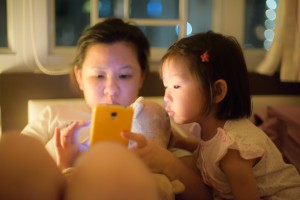
<p>Nowadays when we knock on the door of a child&#8217;s room to check in, we&#8217;re likely as not to see her staring at a screen. Is that a good thing? Should we be happier to find the kid reading, singing, or drawing?</p>
<p>These (and many other) questions lie at the heart of “<a href="http://www.artscouncil.ie/uploadedFiles/Arts-and-cultural-particiption-GUI.pdf">Arts and Cultural Participation among Children and Young People: Insights from the Growing up in Ireland Study</a>,” a 2016 report commissioned by the <a href="http://www.artscouncil.ie/home/">Arts Council of Ireland</a>. The report attempts to gauge the impact of children’s cultural engagement in the context of our digital era.</p>
<p>Authored by Emer Smyth, research professor at the Economic and Social Research Institute (ESRI), “Arts and Cultural Participation” extracts and examines data from <a href="http://www.esri.ie/growing-up-in-ireland/">Growing up in Ireland – the National Longitudinal Study of Children</a> (GUI), a government-funded study conducted from 2006 through 2013. Smyth’s analysis, which draws on the arts-and-culture part of the GUI data, views cultural engagement through a multifaceted prism. Covering a broad age range from early childhood to the throes of adolescence, “Arts and Cultural Participation” weaves seemingly tangential activities like reading, television viewing, and computer screen time into the findings, all while weighing the effects of social disparities in income, education, and cultural access.</p>
<p>Three key findings emerge from Smyth’s analysis of the data:</p>
<ul>
<li>Cultural engagement appears to boost both academic skills and socio-emotional wellbeing for participating children.</li>
<li>The availability of school-based cultural activities correlates with extracurricular arts participation.</li>
<li>Despite the best efforts of school-based interventions, engagement with culture and the arts varies widely among demographic groups in Irish society.</li>
</ul>
<h2><b>Casting a Wide Net</b></h2>
<p>Growing Up in Ireland has a longitudinal design – with data gathered from the same subjects at progressive time points – that probes the cumulative effects of various activities in people’s lives over several years. The inquiry follows two cohorts of children: a group of 11,134 subjects recruited at 9 months of age and then surveyed at ages 3 and 5; and a second cohort of 8,568 children recruited at 9 years of age and again surveyed at age 13.</p>
<p>Smyth’s report for the Arts Council analyzes this data with respect to the likelihood of different groups of children to engage in cultural activities, the influence of schools’ emphasis on cultural activities on children’s cultural engagement outside of school, and the relationship between cultural participation, academic skills, and socio-emotional wellbeing. For younger subjects, researchers interviewed primary and secondary caregivers to learn about activities outside the classroom such as creative play and cultural outings. For older children, questionnaires given to principals and teachers tracked structured activities offered in schools – music, drama, painting and drawing classes – as well as more passive pursuits like attending cultural events. Data for the older group also includes interviews with the subjects themselves.</p>
<p>The GUI dataset tracks two sets of outcomes: cognitive development (as measured by standardized tests) and wellbeing (as measured by the prevalence of socio-emotional difficulties). They control for some individual and family characteristics, such as preschool childcare at age 3, but there are no controls for individual personality traits or certain other environmental factors that might have a role in shaping these outcomes. Thus, the findings are arguably not as reliable as would be the case if the study used an experimental design.</p>
<p>That said, there are other reasons to pay heed to “Arts and Cultural Participation.” While we can’t be sure that the outcomes in question follow solely from cultural engagement, the longitudinal nature of the study, with its ability to compare the same people at different points in time, points provides a useful (and relatively rare) companion to experimental inquiries that typically focus on the short-term effects of engagement. Also of note is GUI’s robust sample size (nearly 20,000 subjects) covering a broad and representative cross-section of Ireland’s population. And while there may be some cultural specificity to studying an ethnically homogenous country like Ireland, that makes the consistency of the findings with studies of the <a href="http://www.ahrc.ac.uk/documents/publications/cultural-value-project-final-report/">value of arts and culture</a> in other countries all the more striking.</p>
<h2><b>What is Culture, Anyway?</b></h2>
<p>Perhaps the most distinctive trait of the Arts Council report is its broad definition of cultural engagement. The analysis incorporates the common pastimes of reading, watching television, and engaging in screen time (including video games) on computers or mobile devices.</p>
<p>The results are telling. Of all included activities, reading gets the highest marks in terms of enhancing both cognition and wellbeing. The report notes that among younger children, “being read to frequently and having more access to books contributes to improved vocabulary.” Unsurprisingly, such children later take up reading on their own. For older kids, “self-directed reading contributes to cognitive development (in terms of both verbal and numeric skills) as well as to academic self-confidence [and] socio-economic wellbeing.” The report cites the country’s relatively high use of libraries and recommends them as places to promote cultural engagement.</p>
<p>In contrast, television viewing and computer screen time yield mixed results: watching more television is associated with improved vocabulary and better reading achievement – but also with greater socio-emotional difficulties. Similar findings emerge for computer screen time. Smyth concludes that television and screen time may “promote verbal skills but at the expense of poorer socio-emotional wellbeing and more negative attitudes to school.” (Interestingly, no attempt is made to single out social media, possibly because at the outset of the GUI study in 2006, it was not as prevalent as it is now.)</p>
<p>Meanwhile, participatory engagement with the arts – activities such as painting/drawing, music or other types of creative expression, and attending cultural events – correlate with improvement in both test scores and socio-emotional wellbeing. These trends are amplified as the subjects age. “Being involved in a structured cultural activity is associated with positive outcomes across all domains,” Smyth writes, “with higher achievement levels, academic self-confidence and happiness, and lower levels of anxiety and socio-emotional difficulties.” However, it&#8217;s worth noting that the magnitude of benefits of arts activities was quite a bit less than the positive impacts of reading for pleasure (for pre-teens) or being read to (for toddlers).</p>
<h2><b>Disparities in Access</b></h2>
<p>Which segments of the population actually enjoy the benefits of cultural participation? The data indicates disparities in youngsters’ cultural engagement along several dimensions:</p>
<ul>
<li><b>Income.</b> Among younger children, “more advantaged families are more likely to read to their child, take them on educational visits and cultural outings, and encourage them to engage in creative play.” Older kids from advantaged families report higher participation in organized after-school activities (which often require payment).</li>
<li><b>Gender.</b> Girls engage more frequently than boys across several categories of arts and culture. E.g.: “Remarkable gender differences were evident in the prevalence of painting or drawing (67 percent of girls did so every day compared with 42 percent of boys) and in enjoying music or dance (73 percent compared with 46 percent doing so every day).”</li>
<li><b>Population density.</b> Living in an urban area facilitates greater access to some amenities such as cultural venues, libraries, and cinema houses. However, the report cites “no significant difference between urban and rural areas” for participatory activities like painting/drawing, reading, and taking lessons in music/dance/drama.</li>
<li><b>Immigrant status.</b> The report cites a “significant difference” between immigrant and native Irish children in involvement in cultural activities in and out of the home, relating this in part to language barriers.</li>
</ul>
<p>Despite these societal disparities, there’s one place where varied demographic groups can simultaneously encounter arts and culture activities: in school.</p>
<h2><b>The Great Equalizer?<br />
</b></h2>
<p>The report reveals a clear correlation between school-based cultural programs and extracurricular participation, both in structured after-school activities and in reading for pleasure. This suggests cultural curricula can offset some of the disparities described above: “school may be the main point of access to arts and cultural activities for many students.”</p>
<p>This effect is apparent even after taking socioeconomic characteristics of individual students into account. Yet Smyth notes that interventions such as Ireland’s Delivering Equality of Opportunity in Schools (DEIS) program, which launched in 2005 to ensure exposure to the arts among disadvantaged students, have not completely corrected the imbalance among different social classes. “In spite of urban DEIS schools’ promotion of cultural activities,&#8221; she writes, &#8220;their students are much less likely than others to read for pleasure or to take music/drama lessons and are more likely to spend a lot of time watching television or playing computer games.” What is not clear from the report is whether disadvantaged schools with these programs promote higher levels of cultural engagement in their students than schools without the programs would.</p>
<p>All in all, “Arts and Cultural Participation” makes a solid case for the benefits of cultural engagement among young people across all demographics. It points to school-based cultural activities as one means of increasing children’s engagement with arts and culture, even if it’s not a panacea. But while what we traditionally think of as arts activities (painting, drawing, music, etc.) can lay claim to some of these benefits, the most striking finding of the report is the across-the-board value of reading for pleasure, both in early childhood and especially in adolescence. So to answer the question posed at the beginning, if you catch your 13-year-old deep into the latest volume of <em>The Hunger Games, </em>it&#8217;s occasion to celebrate.</p>
]]></content:encoded>
			<wfw:commentRss>https://createquity.com/2017/04/the-kids-are-all-right-lessons-from-growing-up-in-ireland/feed/</wfw:commentRss>
		<slash:comments>0</slash:comments>
		</item>
		<item>
		<title>Capsule Review: Growing Up in Ireland</title>
		<link>https://createquity.com/2017/04/capsule-review-growing-up-in-ireland/</link>
		<comments>https://createquity.com/2017/04/capsule-review-growing-up-in-ireland/#respond</comments>
		<pubDate>Mon, 10 Apr 2017 20:47:27 +0000</pubDate>
		<dc:creator><![CDATA[Katie Ingersoll]]></dc:creator>
				<category><![CDATA[Insider]]></category>
		<category><![CDATA[arts education]]></category>
		<category><![CDATA[capsule review]]></category>
		<category><![CDATA[disparities of access]]></category>
		<category><![CDATA[Ireland]]></category>
		<category><![CDATA[wellbeing]]></category>

		<guid isPermaLink="false">https://createquity.com/?p=9929</guid>
		<description><![CDATA[This study’s longitudinal design shows how incremental arts benefits add up over time in the lives of Irish children.]]></description>
				<content:encoded><![CDATA[<div id="attachment_9930" style="width: 570px" class="wp-caption aligncenter"><a href="https://flic.kr/p/ofcvUf"><img loading="lazy" decoding="async" aria-describedby="caption-attachment-9930" class="wp-image-9930" src="https://createquity.com/wp-content/uploads/2017/03/14600526658_35cf121f1b_k.jpg" alt="" width="560" height="374" srcset="https://createquity.com/wp-content/uploads/2017/03/14600526658_35cf121f1b_k.jpg 2048w, https://createquity.com/wp-content/uploads/2017/03/14600526658_35cf121f1b_k-300x200.jpg 300w, https://createquity.com/wp-content/uploads/2017/03/14600526658_35cf121f1b_k-768x513.jpg 768w, https://createquity.com/wp-content/uploads/2017/03/14600526658_35cf121f1b_k-1024x684.jpg 1024w" sizes="auto, (max-width: 560px) 100vw, 560px" /></a><p id="caption-attachment-9930" class="wp-caption-text">&#8220;Story Time&#8221; by flickr user Alan Wat</p></div>
<p><b>Title</b>: Arts and Cultural Participation among Children and Young People: Insights from the Growing up in Ireland Study</p>
<p><b>Author(s)</b>: Dr. Emer Smyth</p>
<p><b>Publisher</b>: The Arts and Research Council of Ireland and The Economic and Social Research Institute (ESRI)</p>
<p><b>Year</b>: 2016</p>
<p><b>URL</b>: <a href="http://www.artscouncil.ie/uploadedFiles/Arts-and-cultural-particiption-GUI.pdf">http://www.artscouncil.ie/uploadedFiles/Arts-and-cultural-particiption-GUI.pdf</a></p>
<p><b>Topics</b>: cultural engagement, television watching, cultural engagement in children, wellbeing, disparities of access, arts education</p>
<p><b>Methods</b>: Longitudinal study, survey, participant interviews, descriptive analysis, multivariate analysis</p>
<p><b>What it says</b>: The report from ESRI and the Arts Council of Ireland analyzes data from “Growing up in Ireland – the National Longitudinal Study of Children (GUI),” in order to address three research topics: 1) the likelihood of different groups of children to engage in cultural activities, 2) the influence of different schools’ emphasis on cultural activities on children’s cultural engagement out of school, and 3) the relationship between participation in cultural activities and other outcomes including academic skills and socio-emotional wellbeing.</p>
<p>The GUI is a longitudinal study performed on two cohorts of children. The first cohort of 11,134 were recruited at nine months, and then surveyed in two subsequent waves at 3 and 5 years of age (the report focuses on data from the second of the two waves). The second cohort of 8,568 children was recruited at 9 years old, with a follow-up study at 13 years old. At each time point, the study consisted of surveys and interviews with the children’s caregivers, tests of cognitive abilities and wellbeing, and surveys completed by the children’s school principals and teachers for the older cohorts. Data from all of the cohorts was re-weighted to ensure that is was representative of the population of children in Ireland.</p>
<p>The researchers analyzed a broad range of types of cultural engagement, including: being read to and self-directed reading, participation in drawing, painting, singing, and rhymes, participation in organized cultural activities such as drama or music, being taken to cultural events or on educational visits, and television watching and computer games. When researchers analyzed the distribution of cultural engagement among different groups, they found higher rates of engagement among children from more advantaged social backgrounds, and with higher levels of educational attainment by the mothers, to varying degrees. Children from highly educated and middle class families watched less television and had less screen time overall. The researchers also note the strong influence of gender on cultural engagement, with girls in multiple age groups participating at higher rates. In a couple of cases – including participation in singing, painting or drawing by three-year-olds and independent reading among nine-year-olds – gender had a greater influence on cultural participation than social background.</p>
<p>Researchers also analyzed the relationship between cultural participation and other outcomes for children. The researchers measured two sets of outcomes: cognitive development as measured by standardized tests and wellbeing as measured by the prevalence of socioeconomic difficulties. The analysis controlled for individual and family characteristics, the type of childcare at age 3, and whether the child had started school at 5, but there was no way to control for individual personalities or other characteristics of the children. However, the second set of data collected for each cohort (at 5 years and 13 years respectively) was analyzed in terms of change from the first set of measurements, which makes that data a more reliable estimate of the actual effects of cultural engagement. The most noticeable relationships between changes in various outcomes over time and cultural engagement were:</p>
<ul>
<li>Being read to frequently between the ages of 3 and 5 and having more access to books contributes to improved vocabulary at age five.</li>
<li>Watching higher amounts of television between ages three and five is related to improved vocabulary but also greater socio-emotional difficulties at age five.</li>
<li>Reading, painting and drawing, attending cultural events, and going on frequent educational visits are all related to decreases in socio-emotional difficulties.</li>
<li>There is moderate improvement in tests on identifying picture similarities for children who are read to, who paint or draw, and who attend cultural events frequently at the age of five.</li>
<li>Among older children, self-directed reading and taking part in structured cultural activities outside school time contribute to cognitive development (in terms of both verbal and numeric skills) as well as to academic self-confidence.</li>
<li>Self-directed reading also contributes to socio-emotional wellbeing.</li>
<li>Similar to patterns observed in the early years, watching higher amounts of television between the ages of 9 and 13 is related to improved verbal skills but at the expense of greater emotional difficulties.</li>
</ul>
<p>The researchers also looked at data provided by the children’s school principals and teachers to assess the role of school-based cultural activities. The researchers found that, taking account of social background and other family characteristics, children attending schools with a strong cultural emphasis – measured as a combination of the relative importance of cultural activities to the school’s ethos and the amount of cultural extracurricular activities provided – were significantly more likely to be involved in structured cultural activities and frequent reading. They were also less likely to spend a lot of time watching television. Researchers also looked at differences across types of schools. Notably, Urban DEIS (or disadvantaged) schools were more likely to employ creative activities and play for younger children, and to provide music/dance and arts/crafts activities at the primary level – as well as musical instruments and dance at the second level because of programs and interventions aimed at those specific schools, designed to promote retention and school engagement. However, children at these schools are less likely to read for pleasure or take music and drama lessons and are more likely to spend lots of time watching television or playing computer games, meaning that these interventions are not enough to overcome the disparities of access to cultural activities observed based on social class.</p>
<p><b>What I think about it</b>: The report makes excellent use of data from a larger study on child outcomes, which seems to have been collected with some study of cultural engagement in mind. While the role of some potential confounding variables like personality factors can&#8217;t be determined from the study design, the longitudinal nature of the study is a valuable companion to existing experimental studies that typically focus on the short-term effects of arts engagement. The analysis of participation data alongside individual and familial characteristics allows the researchers to identify disparities of access to cultural opportunities in the early years of life that are replicated across the lifespan. Finally, the school-based data points to the viability of one of the most common interventions to promote arts access and participation: arts education in schools.</p>
<p>The report showcases the importance of including cultural information within large-scale studies of this nature. It also points out interesting connections between cultural activities as traditionally defined and popular-culture diversions such as television watching, revealing the research benefits of considering cultural activities holistically among audiences of all ages.</p>
<p><b>What it all means</b><span style="font-size: 11pt; font-family: Arial; color: #000000; background-color: transparent; font-weight: 400; font-style: normal; font-variant: normal; text-decoration: none; vertical-align: baseline; white-space: pre-wrap;">: </span>Within this study, reading unsurprisingly wins the day in terms of generating strong positive outcomes for children, but other forms of cultural participation also generate positive results. This study’s longitudinal design allows us to observe how incremental arts benefits add up throughout the actual lives of children over time. While not always dramatic or universal to every arts discipline, the long-term benefits measured in the study are quite apparent, especially in relation to social and emotional development in younger children and cognitive benefits in older children.</p>
<p>Interestingly, both reading and television watching are found to contribute to vocabulary-skills development for children. Yet watching high amounts of television (and spending high amounts of screen time) are associated with higher levels of socio-emotional difficulties. At the same time, arts activities including painting and drawing, attending cultural events, and educational visits correlate with fewer socio-emotional difficulties, which could point to arts engagement as a viable way to counteract negative socio-emotional effects from television watching for young children.</p>
<p>The analysis on disparities of access largely confirms trends researchers have observed in adults. The differences in engagement observed between genders raise interesting questions about how young boys might become more fully engaged in the arts. Finally, the data on schools is both encouraging and not. The study does suggest that emphasis on cultural activities at school can effect cultural engagement outside of school time. However, many programs designed to ensure that arts education activities are provided at disadvantaged schools in Ireland have not effectively overcome disparities of access to cultural activities (besides television). What is not clear from the report is whether disadvantaged schools with these programs promote higher levels of cultural engagement in their students than schools without the programs would. The author also makes note of widespread use of libraries by families with young children, and wonders if they may be a fruitful site for cultural engagement programs.</p>
<p>All of this together suggests that, in Ireland, the arts do indeed benefit children, though not more than reading does. And arts education in schools has a role to play in encouraging higher levels of arts engagement. Questions remain as to whether in-school arts education alone can level disparities of arts access based on socioeconomic status. The larger patterns revealed here are likely to be similar in other comparable societies, but further longitudinal studies in different locations would help to shed light on the long-terms benefits of the arts on individuals within a given society, and the benefits of interventions on the ground.</p>
]]></content:encoded>
			<wfw:commentRss>https://createquity.com/2017/04/capsule-review-growing-up-in-ireland/feed/</wfw:commentRss>
		<slash:comments>0</slash:comments>
		</item>
		<item>
		<title>Capsule Review: Intersectoral Division of Labor</title>
		<link>https://createquity.com/2017/02/capsule-review-intersectoral-division-of-labor/</link>
		<comments>https://createquity.com/2017/02/capsule-review-intersectoral-division-of-labor/#respond</comments>
		<pubDate>Fri, 24 Feb 2017 16:19:28 +0000</pubDate>
		<dc:creator><![CDATA[Katie Ingersoll]]></dc:creator>
				<category><![CDATA[Insider]]></category>
		<category><![CDATA[capacity to create change]]></category>
		<category><![CDATA[capsule review]]></category>
		<category><![CDATA[commercial arts]]></category>
		<category><![CDATA[history of the arts ecosystem]]></category>
		<category><![CDATA[nonprofit sector]]></category>

		<guid isPermaLink="false">https://createquity.com/?p=9798</guid>
		<description><![CDATA[Does organizational form matter? How does it affect the actions of decisions made by organizations?]]></description>
				<content:encoded><![CDATA[<div id="attachment_9799" style="width: 570px" class="wp-caption aligncenter"><a href="https://flic.kr/p/uvv6cM"><img loading="lazy" decoding="async" aria-describedby="caption-attachment-9799" class="wp-image-9799" src="https://createquity.com/wp-content/uploads/2017/02/18711843639_9bde1bd3f0_o.jpg" alt="18711843639_9bde1bd3f0_o" width="560" height="373" srcset="https://createquity.com/wp-content/uploads/2017/02/18711843639_9bde1bd3f0_o.jpg 6000w, https://createquity.com/wp-content/uploads/2017/02/18711843639_9bde1bd3f0_o-300x200.jpg 300w, https://createquity.com/wp-content/uploads/2017/02/18711843639_9bde1bd3f0_o-768x512.jpg 768w, https://createquity.com/wp-content/uploads/2017/02/18711843639_9bde1bd3f0_o-1024x683.jpg 1024w" sizes="auto, (max-width: 560px) 100vw, 560px" /></a><p id="caption-attachment-9799" class="wp-caption-text">Photo credit: EKG Technician Salary</p></div>
<p dir="ltr"><strong>Title:</strong>  Nonprofit organizations and the Intersectoral division of labor in the arts</p>
<p dir="ltr"><strong>Author(s):</strong> Paul J. DiMaggio</p>
<p dir="ltr"><strong>Publisher:</strong> Yale University Press (in The Nonprofit Sector: A research handbook)</p>
<p dir="ltr"><strong>Year:</strong> 2006</p>
<p dir="ltr"><strong>URL:</strong> <a href="https://www.princeton.edu/~artspol/workpap/WP30-DiMaggio.pdf" target="_blank">https://www.princeton.edu/~artspol/workpap/WP30-DiMaggio.pdf</a></p>
<p dir="ltr"><strong>Topics:</strong> Nonprofit arts sector, commercial arts sector</p>
<p dir="ltr"><strong>Methods:</strong> Analysis of economic census data, literature review</p>
<p dir="ltr"><strong>What it says: </strong>The article explores the division between nonprofit and commercial organizations within particular sub-fields within the arts. DiMaggio primarily uses data from the 1997 US Economic Census, which collects data on tax exempt (nonprofits and public) and taxable (for profit) entities in multiple categories. DiMaggio acknowledges several limitations of this data set, most notably that it tends to exclude or underestimate small or unincorporated arts organizations as well as those embedded within larger institutions like universities. DiMaggio relies on the data set despite these drawbacks, since he believes that it is the single best source to determine how arts activities are divided between the for profit and nonprofit arts sectors in the United States.</p>
<p dir="ltr">DiMaggio’s analysis finds that art and history museums are primarily non-profit. Within the performing arts, he finds that fields with the longest history of prestige and recognition as high art (symphonies, resident theatres, operas) tend to adopt non-commercial form while other less prestigious fields (popular music, dinner theatre) tend to adopt commercial status. Fields that have recently gained respect from critics and scholars, such as ethnic dance or Jazz, contain either a mix of organizations of both types, or skew toward the commercial. Overall, the majority of the categories DiMaggio examines are largely dominated by tax exempt organizations.</p>
<p dir="ltr">The author reviews three theories frequently cited in the literature to explain this division between nonprofit and commercial structures, or more specifically the dominance of the nonprofit form in the majority of many arts fields.  The first theory is market failure, or the idea that certain arts activities are not feasible as commercial enterprises and so can only thrive with private or public subsidies (Baumol and Bowen’s landmark work on cost disease in the performing arts is cited). DiMaggio points out that cost disease explains why subsidy is needed, while theories about collective or public goods, or goods which have benefits that accrue beyond those who utilize them, help explain why subsidy is made available.</p>
<p dir="ltr">The second group of theoretical approaches that DiMaggio examines are industrial-organizational in nature. These theories focus on the specific characteristics about the nonprofit organizational form that make it a well-suited for artistic endeavors. DiMaggio discusses literature focused on  variable demand for products, with some patrons willing to pay high amounts to subsidize the availability of the arts product (this “demand” is met by accepting donations from individuals) while  another segment of patrons with less interest or ability to pay have a drastically lower price point and contribute via ticket sales.)  He also discusses “club theory,” which discusses how the governance models of nonprofits are particularly suited to a small group seeking to ensure that their aesthetic sensibility is privileged over business needs. He also discusses theories positing that nonprofit status is useful for organizations in order to signal their commitment to artistic excellence and thereby attract and retain high caliber artists.</p>
<p dir="ltr">Finally, DiMaggio turns to historical and political analyses, which he identifies as an important addition to the theoretical explanations listed above. DiMaggio describes the establishment of nonprofit cultural organizations like museums and symphonies in the 19th century by elites, and then the slow diffusion of this model to other geographic areas as well as additional disciplines like opera or theater. DiMaggio states that, by the mid-20th century “the contours of the intersectoral division of labor in the arts were well defined. All that remained was to fill them in.” According to DiMaggio, this began to happen through the arts funding and field building programs led by the Ford Foundation, as well as the establishment of the NEA and other public funding sources. Public funding also served to broaden the range of arts activities likely to receive institutional subsidies, to include new types of activities like photography or ethnic dance. DiMaggio posits that the availability of private or public subsidies may have made organizations pursuing these activities more likely to be established as or become nonprofits. DiMaggio also references larger demographic shifts that made Americans more educated and prosperous, which in turn created a wider audience for more serious art forms. DiMaggio suggests that these three historical analyses, taken together, provide a solid overall explanation for the intersectoral divisions that appear in his data analysis.</p>
<p dir="ltr">DiMaggio concludes his paper by exploring patterns in the data not accounted for by these theories which also serve as potential areas for further research. He leads with a discussion of efficient boundaries, or tendencies  of organizations to form different types of employment relationships, i.e. long term employment relationships or shorter term contracts with workers (in this case artists). He notes that nonprofit organizations tend to dominate in fields which pursue long term employment arrangements, both in the arts and other sectors. DiMaggio suggests that for those types of organizations that gained an early foothold within the system of philanthropic support as it was being built, the nonprofit form provided an opportunity for managers and artists to limit risk. In fields without this longstanding access to grant support, DiMaggio notes that managers limit risk by decoupling presenting  and artistic activities, while many artists limit risk by subsidizing arts activities through alternate employment, or day jobs.</p>
<p dir="ltr">Next, DiMaggio raises the question of whether cost disease can be addressed in the future, citing recent methods to lower costs within some traditional disciplines, such as delivering symphony music through technological means. Finally, he returns to the importance of arts organizations and programs embedded within universities, churches, and other larger organizations as well as unincorporated organizations and hybrid organizations, which combine characteristics of multiple forms. DiMaggio recognizes that these groups are not fully accounted for in the theories in the article but make up a significant portion of arts activities. He also discusses the division of labor between the public and private sectors, noting that there are few arts fields where public and commercial institutions compete.</p>
<p dir="ltr">DiMaggio’s final question is this: Does organizational form matter? How does it affect the actions of decisions made by organizations? He notes that while there are numerous comparative studies on the differences between nonprofit and commercial organizations for fields like healthcare and education, these are few such studies related to cultural organizations. This means that case studies and theory provide the only available set of literature.</p>
<p dir="ltr">To conclude, DiMaggio highlights larger changes that may affect the sectoral division of labor in the arts going forward. He discusses demographic changes such as new waves of immigration that will lead to a boom in arts activities presenting and furthering the cultures of immigrant groups. These organizations may adopt the nonprofit or the commercial form. He also discusses the eroding boundary of high and popular culture and a gradual erosion of ideologies which privilege European culture over other forms. These trends could lead to future growth areas. He also notes the erosion of clear boundaries between nonprofits and commercial organizations, as many nonprofits are adopting language and practices from the commercial world, and embracing modes of distribution or business endeavors previously seen as too market-based. Lastly, DiMaggio discusses the disruption that new technologies are likely to produce. He predicts that these technological shifts may result in some services currently provided by arts nonprofits shifting to commercial arts firms and vice versa.</p>
<p><strong>What I think about it: </strong>DiMaggio’s use of intersectoral division of labor as a framework to examine the contours of the arts sector proves to be a rich investigation, as evidenced by the number of critical arts issues that come up in his theoretical exploration of this one data set. While there are issues inherent in the data used for his analysis, DiMaggio fully acknowledges these limitations and takes time to explain how they may limit his sector analysis and where they may point to further research. DiMaggio’s literature review is particularly helpful since it combines theories and approaches from economics, organizational theory, and history.</p>
<p><strong>What it all means: </strong>While Createquity understands that organizations as such are not a prerequisite for a healthy arts ecosystem, they can be important factors in the success of the ecosystem. DiMaggio acknowledges the influence that organization types have on the arts sector while refraining from assuming a  default or obvious form for organizations. Instead of letting the current boundaries within the arts sector frame his inquiry, DiMaggio probes them, and in the process identifies multiple avenues of inquiry that may be able to provide insight into critical major arts issues.</p>
]]></content:encoded>
			<wfw:commentRss>https://createquity.com/2017/02/capsule-review-intersectoral-division-of-labor/feed/</wfw:commentRss>
		<slash:comments>0</slash:comments>
		</item>
		<item>
		<title>Notes to &#8220;Everything We Know About Whether and How the Arts Improves Lives&#8221;</title>
		<link>https://createquity.com/2016/12/notes-to-everything-we-know-about-whether-and-how-the-arts-improves-lives/</link>
		<comments>https://createquity.com/2016/12/notes-to-everything-we-know-about-whether-and-how-the-arts-improves-lives/#respond</comments>
		<pubDate>Mon, 19 Dec 2016 14:01:14 +0000</pubDate>
		<dc:creator><![CDATA[Katie Ingersoll, Salem Tsegaye, Ian David Moss and Rebecca Ratzkin]]></dc:creator>
				<category><![CDATA[Insider]]></category>
		<category><![CDATA[art therapy]]></category>
		<category><![CDATA[arts education]]></category>
		<category><![CDATA[arts participation]]></category>
		<category><![CDATA[benefits of the arts]]></category>
		<category><![CDATA[community development]]></category>
		<category><![CDATA[early childhood development]]></category>
		<category><![CDATA[economic development and the arts]]></category>
		<category><![CDATA[health and wellbeing]]></category>
		<category><![CDATA[mental health]]></category>
		<category><![CDATA[older adults]]></category>
		<category><![CDATA[physical health]]></category>
		<category><![CDATA[quality of life]]></category>
		<category><![CDATA[social wellbeing]]></category>
		<category><![CDATA[wellbeing]]></category>

		<guid isPermaLink="false">https://createquity.com/?p=9628</guid>
		<description><![CDATA[The following notes accompany our feature article Everything We Know About Whether and How the Arts Improves Lives, published on December 19, 2016: Methodology for Rating Evidence We use the following definitions for placement on the graph and for describing benefits in the document. Does the evidence indicate that the benefit exists? Yes: the majority<a href="https://createquity.com/2016/12/notes-to-everything-we-know-about-whether-and-how-the-arts-improves-lives/" class="read-more">Read&#160;More</a>]]></description>
				<content:encoded><![CDATA[<p>The following notes accompany our feature article <a href="https://createquity.com/2016/12/everything-we-know-about-whether-and-how-the-arts-improve-lives">Everything We Know About Whether and How the Arts Improves Lives</a>, published on December 19, 2016:</p>
<h3><strong>Methodology for Rating Evidence</strong></h3>
<p>We use the following definitions for placement on the graph and for describing benefits in the document.</p>
<p><strong>Does the evidence indicate that the benefit exists?</strong></p>
<ul>
<li><strong>Yes</strong>: the majority of the available evidence supports the claim</li>
<li><strong>No</strong>: the majority of the available evidence opposes the claim</li>
<li><strong>Mixed</strong>: neither of the above conditions is true</li>
</ul>
<p><strong>How strong is the quality of the evidence?</strong></p>
<ul>
<li><strong>High</strong>: multiple studies with causal designs (experimental or quasi-experimental)</li>
<li><strong>Medium</strong>: a single study with a causal design, or multiple studies that otherwise make a compelling case for causal interpretation in the judgment of our team</li>
<li><strong>Low</strong>: neither of the above conditions is met</li>
</ul>
<p>In cases where the supporting, mixed, and opposing evidence is of differing strength, the stronger evidence is given more weight in determining whether the evidence supports the claim.</p>
<p>In the body of the article, we use the qualifier &#8220;probably&#8221; to describe effects in the Yes/Medium cell of the matrix, &#8220;may&#8221; to describe effects in the Yes/Low, No/Low, and all Mixed cells of the matrix, &#8220;probably not&#8221; to describe effects in the No/Medium cell of the matrix, and &#8220;does not&#8221; to describe effects in the No/High cell of the matrix.</p>
<p><em>Note: in general, we support methodological diversity, and are not dogmatic about valuing &#8220;gold standard&#8221; study designs such as randomized controlled trials at the expense of all other types of research. However, in practice, studies with causal designs tend to be much rarer than descriptive and case-study-based research, and therefore more valuable due to their scarcity and the fact that they are typically more challenging to conduct. In addition, given that the questions explored in this review are inherently causal in nature – can we trust that an activity or intervention makes some kind of benefit more likely – it is appropriate to privilege designs that make a convincing attempt to rule out alternative hypotheses for any observed effects. Our rating of evidence strength takes these considerations into account. </em></p>
<h3><strong>Full Bibliography</strong></h3>
<p>Below is a full list of resources which informed this research investigation. Much of our research focused on literature reviews or meta-analyses, and we have included here works that were consulted directly, as well as resources that were encountered within a review and factored into our findings. Works that received a thorough review from Createquity are marked with an asterisk (*).</p>
<p>Arts Council England. (2006). <i>The Power of Art. Visual arts: evidence of impact. Part 2.</i> London. Retrieved from <a href="http://www.artscouncil.org.uk/media/uploads/ documents/publications/phpOCmaHq.pdf" target="_blank">www.artscouncil.org.uk/media/uploads/ documents/publications/phpOCmaHq.pdf</a> </p>
<p>Arts Council England. (2014). <i>The Value of Arts and Culture to People and Society: An Evidence Review.</i> Retrieved from http://www.artscouncil.org.uk/sites/default/files/download-file/Value_arts_culture_evidence_review.pdf</p>
<p>Arts Midwest, &amp; Metropolitan Group. (2015). <i>Creating Connection: Research Findings and Proposed Message Framework to Build Public Will for Arts and Culture</i>. Retrieved from <a href="http://www.artsmidwest.org/sites/default/files/ArtsMidwest_BPWReport.pdf" target="_blank">http://www.artsmidwest.org/sites/default/files/ArtsMidwest_BPWReport.pdf</a></p>
<p>Asbury, C. H., &amp; Rich, B. (2008). <i>Learning, arts, and the brain: The dana consortium report on arts and cognition</i>. Dana Press.</p>
<p>Bakhshi, H., Freeman, A., &amp; Higgs, P.. (2013). <i>Dynamic Mapping of The UK’s Creative Industries</i>. NESTA. Retrieved from <a href="http://www.nesta. org.uk/publications/dynamic-mapping-uks-creative-industries" target="_blank">www.nesta. org.uk/publications/dynamic-mapping-uks-creative-industries</a></p>
<p>Baxter, C., Tyler, P., Moore, B., Morrison, N., McGaffin, R., &amp; Otero-Garcia, M. (2005). <i>Enterprising Places: Sustaining Competitive Locations for Knowledge-Based Business</i>. Cambridge, UK: Cambridge–MIT Institute.</p>
<p>BOP Consulting. (2011). <i>Edinburgh Festivals Impact Study. Final Report.</i> London. Retrieved from <a href="http://www.eventscotland.org/ resources/downloads/get/56.pdf" target="_blank">www.eventscotland.org/ resources/downloads/get/56.pdf</a></p>
<p>*Brown, A. (2006). An Architecture of Value. <i>GIA Reader</i>, <i>17</i>(1). Retrieved from <a href="http://www.giarts.org/article/architecture-value">http://www.giarts.org/article/architecture-value</a></p>
<p>Brown, E. D., &amp; Sax, K. L. (2013). Arts enrichment and preschool emotions for low-income children at risk. <i>Early Childhood Research Quarterly</i>, <i>28</i>(2), 337–346.</p>
<p>Bygren, L. O., Johansson, S.-E., Konlaan, B. B., Grjibovski, A. M., Wilkinson, A. V., &amp; Sjöström, M. (2009). Attending cultural events and cancer mortality: A Swedish cohort study. <i>Arts &amp; Health</i>, <i>1</i>(1), 64–73.</p>
<p>Carnwath, J. D., &amp; Brown, A. S. (2014). <i>Understanding the Value and Impacts of Cultural Experiences: A Literature Review</i>. WolfBrown and Arts Council England. Retrieved from <a href="http://www.artscouncil.org.uk/media/uploads/pdf/Understanding_the_value_and_impacts_of_cultural_experiences.pdf" target="_blank">http://www.artscouncil.org.uk/media/uploads/pdf/Understanding_the_value_and_impacts_of_cultural_experiences.pdf</a></p>
<p><i>CASE programme: understanding the drivers, impacts and value of engagement in culture and sport</i>. (2010). Retrieved from <a href="https://www.gov.uk/government/publications/case-programme-understanding-the-drivers-impacts-and-value-of-engagement-in-culture-and-sport" target="_blank">https://www.gov.uk/government/publications/case-programme-understanding-the-drivers-impacts-and-value-of-engagement-in-culture-and-sport</a></p>
<p>CEBR. (2013). <i>The contribution of the arts and culture to the national economy.</i> London. Retrieved from <a href="http://www.artscouncil.org.uk/media/uploads/pdf/CEBR_economic_ report_web_version_0513.pdf" target="_blank">www.artscouncil.org.uk/media/uploads/pdf/CEBR_economic_ report_web_version_0513.pdf</a></p>
<p>Clarke, E., DeNora, T., &amp; Vuoskoski, J. (n.d.). <i>Music, Empathy, and Cultural Understanding</i>. 2014: Arts &amp; Humanities Research Council.</p>
<p>Clawson, H. J., &amp; Coolbaugh, K. (2001). <i>The YouthARTS Development Project. Juvenile Justice Bulletin.</i> Washington, D.C.: Department of Justice, Office of Juvenile Justice and Delinquency Prevention. Retrieved from <a href="http://eric.ed.gov/?id=ED454130" target="_blank">http://eric.ed.gov/?id=ED454130</a></p>
<p>Clift, S, Hancox, G, Morrison, I, Hess, B, Stewart, D, &amp; Kreutz, G. (2008). <i>Choral Singing, Wellbeing and Health: Summary of Findings from a Cross-national Survey.</i> Sidney De Haan Research Centre for Arts and Health, Canterbury Christ Church University. Retrieved from <a href="http://eric.ed.gov/?id=ED454130" target="_blank">https://www.canterbury. ac.uk/health-and-wellbeing/sidney-de-haan-research-centre/ documents/choral-singing-summary-report.pdf</a></p>
<p>Clift, S., Skingley, A., Coulton, S., &amp; Rodriguez, J. (2012). A controlled evaluation of the health benefits of a participative community singing programme for older people (Silver Song Clubs). Sidney De Haan </p>
<p>*Crossick, G., &amp; Kaszynska, P. (2016). <i>Understanding the Value of Arts and Culture: The AHRC Cultural Value Project</i>. United Kingdom: Arts &amp; Humanities Research Council. Retrieved from <a href="http://www.ahrc.ac.uk/documents/publications/cultural-value-project-final-report/" target="_blank">http://www.ahrc.ac.uk/documents/publications/cultural-value-project-final-report/</a></p>
<p>Research Centre for Arts and Health, Canterbury Christ Church University, Folkestone, Kent, UK. <i>Canterbury Christ Church University, Folkestone, Kent, UK: Retrieved from <a href="http://www.ahsw.org.uk/userfiles/Other_Resources/SSCRCTsummaryreportOct12.pdf" target="_blank">http://www. Ahsw. Org. uk/userfiles/Other_Resources/SSCRCTsummaryreportOct12. Pdf</a></i></p>
<p>Daykin, N., &amp; Byrne, E. (2006). <i>The impact of visual arts and design on the health and wellbeing of patients and staff in mental health care: A systematic review of the literature</i>. University of the West of England.</p>
<p>Development Services Group, Inc. (2016). <i>Arts-Based Programs and Arts Therapies for At-Risk, Justice-Involved, and Traumatized Youths</i>. Washington, D.C.: Office of Juvenile Justice and Delinquency Prevention. Retrieved from <a href="http://www.ojjdp.gov/mpg/litreviews/Arts-Based-Programs-for-Youth.pdf" target="_blank">http://www.ojjdp.gov/mpg/litreviews/Arts-Based-Programs-for-Youth.pdf</a></p>
<p>Education Endowment Foundation. (2016). <i>Hallé SHINE on Manchester: Evaluation report and executive summary</i>. Retrieved from <a href="https://educationendowmentfoundation.org.uk/our-work/projects/shine-on-manchester/" target="_blank">https://educationendowmentfoundation.org.uk/our-work/projects/shine-on-manchester/</a></p>
<p>Everitt, A., Hamilton, R., &amp; White, M. (2003). <i>Arts, health and community: A study of five arts in community health projects</i>. University of Durham.</p>
<p>Falck, O., Fritsch, M., &amp; Heblich, S. (2011). The phantom of the opera: Cultural amenities, human capital, and regional economic growth. <i>Labour Economics</i>, <i>18</i>(6), 755–766.</p>
<p>Feldman, A. F., &amp; Matjasko, J. L. (2005). The Role of School-Based Extracurricular Activities in Adolescent Development: A Comprehensive Review and Future Directions. <i>Review of Educational Research</i>, <i>75</i>(2), 159–210. <a href="https://doi.org/10.3102/00346543075002159" target="_blank">https://doi.org/10.3102/00346543075002159</a></p>
<p>Fujiwara, D. (2013). <i>Museums and Happiness: The Value of Participating in Museums and the Arts</i> (The Happy Museum). Retrieved from <a href="http://www.happymuseumproject.org/wp-content/uploads/2013/04/Museums_and_happiness_DFujiwara_April2013.pdf" target="_blank">http://www.happymuseumproject.org/wp-content/uploads/2013/04/Museums_and_happiness_DFujiwara_April2013.pdf</a></p>
<p>*Fujiwara, D., Kudrna, L., &amp; Dolan, P. (2014a). <i>Quantifying and Valuing the Wellbeing Impacts of Culture and Sport</i>. Department for Culture, Media and Sport. Retrieved from <a href="https://www.gov.uk/government/uploads/system/uploads/attachment_data/file/304899/Quantifying_and_valuing_the_wellbeing_impacts_of_sport_and_culture.pdf" target="_blank">https://www.gov.uk/government/uploads/system/uploads/attachment_data/file/304899/Quantifying_and_valuing_the_wellbeing_impacts_of_sport_and_culture.pdf</a></p>
<p>*Fujiwara, D., Kudrna, L., &amp; Dolan, P. (2014b). <i>Quantifying the Social Impacts of Culture and Sport</i>. Department of Culture, Media and Sport. Retrieved from <a href="https://www.gov.uk/government/uploads/system/uploads/attachment_data/file/304896/Quantifying_the_Social_Impacts_of_Culture_and_Sport.pdf" target="_blank">https://www.gov.uk/government/uploads/system/uploads/attachment_data/file/304896/Quantifying_the_Social_Impacts_of_Culture_and_Sport.pdf</a></p>
<p>Garrod, B. (2014). <i>Investigating the role of Eisteddfodau in creating and transmitting cultural value in Wales and beyond</i>. Arts &amp; Humanities Research Council.</p>
<p>Gerry, D., Unrau, A., &amp; Trainor, L. J. (2012). Active music classes in infancy enhance musical, communicative and social development: Active music classes enhance development. <i>Developmental Science</i>, <i>15</i>(3), 398–407. <a href="https://doi.org/10.1111/j.1467-7687.2012.01142.x" target="_blank">https://doi.org/10.1111/j.1467-7687.2012.01142.x</a></p>
<p>Giordano, P. C., Cernkovich, S. A., &amp; Rudolph, J. L. (2002). Gender, crime, and desistance: Toward a theory of cognitive transformation1. <i>American Journal of Sociology</i>, <i>107</i>(4), 990–1064.</p>
<p>Graham, G., Chattopadhyay, S., &amp; Lakhanpal, J.R. (2014). <i>Using New Metrics to Assess the Role of the Arts in Well-Being: Some Initial Results from the Economics of Happiness</i>. The Brookings Institute. Retrieved from <a href="https://www.arts.gov/sites/default/files/Brookings-Final-Report.pdf">https://www.arts.gov/sites/default/files/Brookings-Final-Report.pdf</a></p>
<p>Greene, J. P., Kisida, B., &amp; Bowen, D. H. (2014). The educational value of field trips. <i>Education Next</i>, <i>14</i>(1).</p>
<p>Grodach, C., Foster, N., &amp; Murdoch III, J. (2014). Gentrification and the artistic dividend: the role of the arts in neighborhood change. <i>Journal of the American Planning Association</i>, <i>80</i>(1), 21–35.</p>
<p>Grossi, E., Blessi, G. T., Sacco, P. L., &amp; Buscema, M. (2012). The interaction between culture, health and psychological well-being: Data mining from the Italian culture and well-being project. <i>Journal of Happiness Studies</i>, <i>13</i>(1), 129–148.</p>
<p>Guetzkow, J. (2002). How the Arts Impact Communities: An introduction to the literature on arts impact studies. Presented at the Taking the Measure of Culture Conference, Princeton University: Princeton University Center for Arts and Cultural Policy Studies. Retrieved from <a href="https://www.princeton.edu/~artspol/workpap/WP20%20-%20Guetzkow.pdf">https://www.princeton.edu/~artspol/workpap/WP20%20-%20Guetzkow.pdf</a></p>
<p>Hacking, S., Secker, J., Spandler, H., Kent, L., &amp; Shenton, J. (2008). Evaluating the impact of participatory art projects for people with mental health needs. <i>Health &amp; Social Care in the Community</i>, <i>16</i>(6), 638–648.</p>
<p>Hancock, M. R. (1993). Character journals: Initiating involvement and identification through literature. <i>Journal of Reading</i>, <i>37</i>(1), 42–50.</p>
<p>Hervas-Olivier, J., &amp; others. (2011). <i>The Importance of Creative Industries Agglomerations in Explaining the Wealth of European Regions</i>. DRUID. Retrieved from <a href="http://druid8.sit.aau.dk/acc_ papers/3u3ov4ld8gx1uvxa4pgddeivjeg5.pdf" target="_blank">http://druid8.sit.aau.dk/acc_ papers/3u3ov4ld8gx1uvxa4pgddeivjeg5.pdf</a> </p>
<p>Hesmondhalgh, D., &amp; Pratt, A. (2005). Cultural industries</p>
<p>Hetland, L., &amp; Winner, E. (2001). The arts and academic achievement: What the evidence shows. <i>Arts Education Policy Review</i>, <i>102</i>(5), 3–6.</p>
<p>Holden, J. (2006). <i>Cultural value and the crisis of legitimacy</i>. Demos London.</p>
<p>Hyyppä, M. T., Mäki, J., Impivaara, O., &amp; Aromaa, A. (2006). Leisure participation predicts survival: a population-based study in Finland. Health Promotion International, 21(1), 5–12.</p>
<p>Ings, R., Crane, N., &amp; Cameron, M. (2012). <i>Be Creative Be Well. Arts, wellbeing and local communities. An evaluation</i>. London: Arts Council England. Retrieved from <a href="http://www.artscouncil.org.uk/media/uploads/pdf/BCBW_final.pdf" target="_blank">www.artscouncil.org.uk/media/uploads/pdf/BCBW_final.pdf</a></p>
<p>*Jackson, M. R., &amp; Herranz, J. (2002). <i>Culture Counts in Communities: A Framework for Measurement</i> (Research Report). The Urban Institute. Retrieved from <a href="http://www.urban.org/UploadedPDF/310834_culture_counts.pdf" target="_blank">http://www.urban.org/UploadedPDF/310834_culture_counts.pdf</a></p>
<p>*Jackson, M. R., Kabwasa-Green, F., &amp; Herranz, J. (2006). <i>Cultural Vitality in Communities: Interpretation and Indicators</i>. The Urban Institute. Retrieved from <a href="http://www.urban.org/projects/cultural-vitality-indicators/publications.cfm" target="_blank">http://www.urban.org/projects/cultural-vitality-indicators/publications.cfm</a></p>
<p>John S. and James L. Knight Foundation. (2010). <i>Soul of the Community &#8211; Overall Findings</i>. Retrieved from <a href="http://www.knightfoundation.org/sotc/" target="_blank">http://www.knightfoundation.org/sotc/</a></p>
<p>Jones, S. (2010). <i>Culture shock</i>. London: Demos.</p>
<p>Kattenstroth, J.C., Kalisch, T., Holt, S., Tegenthoff, M., &amp; Dinse, H. R. (2013). Six months of dance intervention enhances postural, sensorimotor, and cognitive performance in elderly without affecting cardio-respiratory functions. <i>Frontiers in Aging Neuroscience</i>, <i>5</i>, 5.</p>
<p>Kay, A. (2000). Art and community development: the role the arts have in regenerating communities. <i>Community Development Journal</i>, <i>35</i>(4), 414–424.</p>
<p>Kay, A., &amp; Watt, G. (2000). <i>The role of the arts in regeneration</i>. Scottish Executive.</p>
<p>Kidd, D. C., &amp; Castano, E. (2013). Reading literary fiction improves theory of mind. <i>Science</i>, <i>342</i>(6156), 377–380.</p>
<p>Konlaan, B. B., Bygren, L. O., &amp; Johansson, S.-E. (2000). Visiting the cinema, concerts, museums or art exhibitions as determinant of survival: a Swedish fourteen-year cohort follow-up. <i>Scandinavian Journal of Public Health</i>, <i>28</i>(3), 174–178.</p>
<p>Lambert, C. (2014). <i>The Value of Live Art: experience, politics and affect</i>. Arts &amp; Humanities Research Council.</p>
<p>Lobo, Y. B., &amp; Winsler, A. (2006). The effects of a creative dance and movement program on the social competence of head start preschoolers. <i>Social Development</i>, <i>15</i>(3), 501–519.</p>
<p>Lowe, S. S. (2000). Creating community art for community development. <i>Journal of Contemporary Ethnography</i>, <i>29</i>(3), 357–386.</p>
<p>Manchester, M, &amp; Pett, E. (n.d.). <i>Teenage Kicks: Exploring cultural value from a youth perspective</i>. Arts &amp; Humanities Research Council.</p>
<p>*Mark J. Stern. (2007). <i>Culture and Urban Revitalization: A Harvest Document</i>. University of Pennsylvania. Retrieved from <a href="https://www.reinvestment.com/wp-content/uploads/2015/12/Culture_and_Urban_Revitalization_A_Harvest_Document-Report_2007.pdf" target="_blank">https://www.reinvestment.com/wp-content/uploads/2015/12/Culture_and_Urban_Revitalization_A_Harvest_Document-Report_2007.pdf</a></p>
<p>*Markusen, A., &amp; Gadwa, A. (2010). Arts and culture in urban or regional planning: A review and research agenda. <i>Journal of Planning Education and Research</i>, <i>29</i>(3), 379–391.</p>
<p>Martin, A. J., Mansour, M., Anderson, M., Gibson, R., Liem, A., &amp; Sudmalis, D. (2013). The Role of Arts Participation in Students’ Academic and Nonacademic Outcomes: A Longitudinal Study of School, Home, and Community Factors. <i>ResearchGate</i>, <i>105</i>(3), 709–727. <a href="https://doi.org/10.1037/a0032795" target="_blank">https://doi.org/10.1037/a0032795</a></p>
<p>*Matarasso, F. (1997). Use or Ornament? The Social Impact of Participation in the Arts. <i>Comedia</i>. Retrieved from <a href="http://www.feisean.org/wp-content/uploads/Use-or-Ornament.pdf" target="_blank">http://www.feisean.org/wp-content/uploads/Use-or-Ornament.pdf</a></p>
<p>*McCarthy, K., Ondaatje, E., Zakaras, L., Brooks, A., &amp; RAND. (2004). <i>Gifts of the Muse: Reframing the Debate About the Benefits of the Arts</i>. RAND. Retrieved from <a href="http://www.rand.org/content/dam/rand/pubs/monographs/2005/RAND_MG218.pdf" target="_blank">http://www.rand.org/content/dam/rand/pubs/monographs/2005/RAND_MG218.pdf</a></p>
<p>McLean, J., Woodhouse, A., Goldie, I., Chylarova, E., &amp; Williamson, T. (2011). An evidence review of the impact of participatory arts on older people. <i>Edinburgh: Mental Health Foundation. <a href="http://baringfoundation.org.uk/wp-content/uploads/2011/04/EvidenceReview.pdf" target="_blank">http://baringfoundation.org.uk/wp-content/uploads/2011/04/EvidenceReview.pdf</a> Luettu</i>, <i>16</i>, 2013.</p>
<p>Medeiros, K. de, &amp; Basting, A. (2014). “Shall I Compare Thee to a Dose of Donepezil?”: Cultural Arts Interventions in Dementia Care Research. <i>The Gerontologist</i>, <i>54</i>(3), 344–353. <a href="https://doi.org/10.1093/geront/gnt055" target="_blank">https://doi.org/10.1093/geront/gnt055</a></p>
<p>Medvedeva, M., Novak-Leonard, J., Brown, A,. (2011). <i>Audience Impact Study: Literature Review</i>. WolfBrown and the National Endowment for the Arts. Retrieved from <a href="http://arts.gov/sites/default/files/Audience-Impact-Study-Literature-Review.pdf" target="_blank">http://arts.gov/sites/default/files/Audience-Impact-Study-Literature-Review.pdf</a></p>
<p>*Menzer, M. (2015). <i>The Arts in Early Childhood: Social and Emotional Benefits of Participation</i>. National Endowment for the Arts. Retrieved from <a href="https://www.arts.gov/sites/default/files/arts-in-early-childhood-dec2015-rev.pdf" target="_blank">https://www.arts.gov/sites/default/files/arts-in-early-childhood-dec2015-rev.pdf</a></p>
<p>Morley, E., &amp; Winkler, M.K.. (2014). <i>The Validating Arts &amp; Livability Indicators (VALI) Study: Results and Recommendations</i>. Urban Institute. Retrieved from <a href="http://arts.gov/sites/default/files/VALI-Report.pdf">http://arts.gov/sites/default/files/VALI-Report.pdf</a></p>
<p>*National Endowment for the Arts. (2012). <i>How Art Works</i>. Retrieved from <a href="http://arts.gov/sites/default/files/How-Art-Works_0.pdf" target="_blank">http://arts.gov/sites/default/files/How-Art-Works_0.pdf</a></p>
<p>National Endowment for the Arts. (2013). <i>The Arts and Aging: Building the Science</i>.</p>
<p>Newman, M., Bird, K., Tripney, J., Kalra, N., Kwan, I., Bangpan, M., &amp; Vigurs, C. (2010). Understanding the impact of engagement in culture and sport: A systematic review of the learning impacts for young people. Retrieved from <a href="http://eprints.ioe.ac.uk/16334/1/Understanding_the_impacts_main_report.pdf" target="_blank">http://eprints.ioe.ac.uk/16334/1/Understanding_the_impacts_main_report.pdf</a></p>
<p>Nicolopoulou, A., Barbosa de Sá, A., Ilgaz, H., &amp; Brockmeyer, C. (2009). Using the Transformative Power of Play to Educate Hearts and Minds: From Vygotsky to Vivian Paley and Beyond. <i>Mind, Culture, and Activity</i>, <i>17</i>(1), 42–58. <a href="https://doi.org/10.1080/10749030903312512" target="_blank">https://doi.org/10.1080/10749030903312512</a></p>
<p>Niemi, L. (2014). <i>The Arts &amp; Economic Vitality: relationships between the Arts, entrepreneurship, &amp; innovation in the workplace (working paper).</i> Washington, DC: NEA. Retrieved from <a href="http://arts.gov/sites/default/files/Research-Art-Works- BostonCollege.pdf" target="_blank">http://arts.gov/sites/default/files/Research-Art-Works- BostonCollege.pdf</a></p>
<p>*Noice, T., Noice, H., &amp; Kramer, A. F. (2013). Participatory Arts for Older Adults: A Review of Benefits and Challenges. <i>The Gerontologist</i>, gnt138. <a href="https://doi.org/10.1093/geront/gnt138" target="_blank">https://doi.org/10.1093/geront/gnt138</a></p>
<p>Pajaczkowska, C. (n.d.). <i>Empathy by Design</i>. Arts &amp; Humanities Research Council. Retrieved from <a href="https://www.academia.edu/12247924/Empathy_By_Design" target="_blank">https://www.academia.edu/12247924/Empathy_By_Design</a></p>
<p>Petrie, K. J., Fontanilla, I., Thomas, M. G., Booth, R. J., &amp; Pennebaker, J. W. (2004). Effect of written emotional expression on immune function in patients with human immunodeficiency virus infection: a randomized trial. <i>Psychosomatic Medicine</i>, <i>66</i>(2), 272–275.</p>
<p>Putnam, R. D. (1994). What makes democracy work? <i>Review-Institute of Public Affairs</i>, <i>47</i>(1), 31.</p>
<p>Reynolds, J, Hetherington, J., O’Sullivan, A, Clayton, K, &amp; Holmes, J.. (2014). <i>The story of Lidice and Stoke-on-Trent: towards deeper understandings of the role of arts and culture</i>. Arts &amp; Humanities Research Council.</p>
<p>Ritblatt, S., Longstreth, S., Hokoda, A., Cannon, B.-N., &amp; Weston, J. (2013b). Can music enhance school-readiness socioemotional skills? <i>Journal of Research in Childhood Education</i>, <i>27</i>(3), 257–266.</p>
<p>Roger Tym &amp; Partners. (2011). <i>Economic Impact of the Liverpool Arts Regeneration Consortium.</i> Manchester. Retrieved from <a href="http://www.larc.uk.com/wp-content/ uploads/2011/10/LARC-Economic-Impact-Final-Report.pdf" target="_blank">www.larc.uk.com/wp-content/ uploads/2011/10/LARC-Economic-Impact-Final-Report.pdf</a></p>
<p>Sacco, P.L. (2013, October). <i>Culture 3.0: the impact of culture on social and economic development, &amp; how to measure it</i>. Presented at the Scientific Support for Growth and Jobs: cultural and creative industries conference, Brussels.</p>
<p>Särkämö, T., Tervaniemi, M., Laitinen, S., Forsblom, A., Soinila, S., Mikkonen, M., … others. (2008). Music listening enhances cognitive recovery and mood after middle cerebral artery stroke. <i>Brain</i>, <i>131</i>(3), 866–876.</p>
<p>Schellenberg, E. G. (2004). Music Lessons Enhance IQ. <i>Psychological Science</i>, <i>15</i>(8), 511–514. <a href="https://doi.org/10.1111/j.0956-7976.2004.00711.x">https://doi.org/10.1111/j.0956-7976.2004.00711.x</a></p>
<p>Scottish Government, S. A. H. (2006, January 20). Quality of Life and Well-being: Measuring the Benefits of Culture and Sport: Literature Review and Thinkpiece [Research Publications]. Retrieved January 24, 2015, from <a href="http://www.scotland.gov.uk/Publications/2006/01/13110743/0">http://www.scotland.gov.uk/Publications/2006/01/13110743/0</a></p>
<p>See, H. B, &amp; Dimitra Kokotsaki, D. (2016). <i>Impact of arts education on the cognitive and non-cognitive outcomes of school-aged children</i>. Durham University and the Education Endowment Foundation. Retrieved from <a href="https://educationendowmentfoundation.org.uk/public/files/Publications/Arts_Education_Review.pdf">https://educationendowmentfoundation.org.uk/public/files/Publications/Arts_Education_Review.pdf</a></p>
<p>*Sheppard, S.C, Oehler, K., Benjamin, B., &amp; Kessler, A.. (2006). <i>Culture and Revitalization: The Economic Effects of MASS MoCA on its Community</i> (No. C3 D Report NA3.2006). North Adams, MA: Center for Creative Community Development. Retrieved from <a href="http://web.williams.edu/Economics/ArtsEcon/library/pdfs/NA%20Economic%20Impacts%2032006.pdf" target="_blank">http://web.williams.edu/Economics/ArtsEcon/library/pdfs/NA%20Economic%20Impacts%2032006.pdf</a></p>
<p>*Staricoff, R. L. (2004). <i>Arts in health: a review of the medical literature</i>. Arts Council England London. Retrieved from <a href="http://www.artsandhealth.ie/wp-content/uploads/2011/08/AHReview-of-Medical-Literature1.pdf" target="_blank">http://www.artsandhealth.ie/wp-content/uploads/2011/08/AHReview-of-Medical-Literature1.pdf</a></p>
<p>*Stern, M. J., &amp; Susan C Seifert. (2013). <i>Cultural Ecology, Neighborhood Vitality, and Social Wellbeing &#8211; A Philadelphia Project</i>. University of Pennsylvania Social Impact of the Arts Project (SIAP). Retrieved from <a href="https://www.arts.gov/exploring-our-town/sites/arts.gov.exploring-our-town/files/SIAP%20CULTUREBLOCKS%20REPORT%20DEC2013%20V1.pdf" target="_blank">https://www.arts.gov/exploring-our-town/sites/arts.gov.exploring-our-town/files/SIAP%20CULTUREBLOCKS%20REPORT%20DEC2013%20V1.pdf</a></p>
<p>Taylor, P, Davies, L., Christy, E, Cooley, E., Taylor, A., Jones,R, Dumas, V. (2015). <i>The Social Benefits of Engagement with Culture and Sport</i>. London: DCMS. Retrieved from <a href="https://www.gov.uk/government/uploads/ system/uploads/attachment_data/file/416279/A_review_of_ the_Social_Impacts_of_Culture_and_Sport.pdf" target="_blank">https://www.gov.uk/government/uploads/ system/uploads/attachment_data/file/416279/A_review_of_ the_Social_Impacts_of_Culture_and_Sport.pdf</a></p>
<p>*Tepper, S. (2014). <i>Artful living: Examining the relationship between artistic practice and subjective wellbeing across three national surveys</i>. The Curb Center for Art, Enterprise, and Public Policy at Vanderbilt University. Retrieved from <a href="http://arts.gov/sites/default/files/Research-Art-Works-Vanderbilt.pdf" target="_blank">http://arts.gov/sites/default/files/Research-Art-Works-Vanderbilt.pdf</a></p>
<p>The Cultural Learning Alliance. (2011). <i>Key Research Findings: The Case for Cultural Learning</i>. Retrieved from <a href="http://www.culturallearningalliance.org.uk/images/uploads/Key_Research_Findings.pdf" target="_blank">http://www.culturallearningalliance.org.uk/images/uploads/Key_Research_Findings.pdf</a></p>
<p>The National Endowment for the Arts. (2011). <i>The Arts and Human Development</i>. Retrieved from <a href="https://www.arts.gov/sites/default/files/TheArtsAndHumanDev.pdf" target="_blank">https://www.arts.gov/sites/default/files/TheArtsAndHumanDev.pdf</a></p>
<p>Tooby, J., &amp; Cosmides, L. (2001). Does beauty build adapted minds? Toward an evolutionary theory of aesthetics, fiction, and the arts. <i>SubStance</i>, <i>30</i>(1), 6–27.</p>
<p>*Topos Partnership for the Fine Arts Fund. (n.d.). <i>The Arts Ripple Effect: A Research-Based Strategy to Build Shared Responsibility for the Arts</i>. Retrieved from <a href="http://www.theartswave.org/sites/default/files/pdfs/The-Arts-Ripple-Report-January-2010.pdf" target="_blank">http://www.theartswave.org/sites/default/files/pdfs/The-Arts-Ripple-Report-January-2010.pdf</a></p>
<p>Trüby, J., Rammer, C., Müller, K., &amp; others. (2008). <i>The role of creative industries in industrial Innovation</i>. ZEW-Zentrum für Europäische Wirtschaftsforschung/Center for European Economic Research. Retrieved from <a href="https://ideas.repec.org/p/zbw/zewdip/7499.html" target="_blank">https://ideas.repec.org/p/zbw/zewdip/7499.html</a></p>
<p>Verghese, J., Lipton, R. B., Katz, M. J., Hall, C. B., Derby, C. A., Kuslansky, G., … Buschke, H. (2003). Leisure activities and the risk of dementia in the elderly. <i>New England Journal of Medicine</i>, <i>348</i>(25), 2508–2516.</p>
<p>Vlismas, W., Malloch, S., &amp; Burnham, D. (2013). The effects of music and movement on mother–infant interactions. <i>Early Child Development and Care</i>, <i>183</i>(11), 1669–1688.</p>
<p>Wolf, D. (2016). <i>Why Making Music Matters:</i> WolfBrown and Carnegie Hall’s Weill Music Institute. Retrieved from <a href="http://www.carnegiehall.org/uploadedFiles/Resources_and_Components/PDF/WMI/WhyMusicMatters.pdf">http://www.carnegiehall.org/uploadedFiles/Resources_and_Components/PDF/WMI/WhyMusicMatters.pdf</a></p>
<p>*Wali, A., Severson, R., &amp; Longoni, M. (2002). <i>Informal Arts: Finding cohesion, capacity, and other cultural benefits in unexpected places</i>. The Chicago Center for Arts Policy at Columbia College. Retrieved from <a href="http://www.americansforthearts.org/sites/default/files/Informal_Arts_Full_Report.pdf" target="_blank">http://www.americansforthearts.org/sites/default/files/Informal_Arts_Full_Report.pdf</a></p>
<p>Weinberg, M. K., &amp; Joseph, D. (2016). If you’re happy and you know it: Music engagement and subjective wellbeing. <i>Psychology of Music</i>, 305735616659552. <a href="https://doi.org/10.1177/0305735616659552" target="_blank">https://doi.org/10.1177/0305735616659552</a></p>
<p>*What Works Centre for Local Economic Growth. (2016). <i>Evidence Review 3: Arts and Culture</i>. Retrieved from <a href="http://www.whatworksgrowth.org/public/files/Policy_Reviews/16-06-15_Culture_and_Sport_Updated.pdf" target="_blank">http://www.whatworksgrowth.org/public/files/Policy_Reviews/16-06-15_Culture_and_Sport_Updated.pdf</a></p>
<p>Wheatley, D., &amp; Bickerton, C. (2016). Subjective well-being and engagement in arts, culture and sport. <i>Journal of Cultural Economics</i>, 1–23. <a href="https://doi.org/10.1007/s10824-016-9270-0" target="_blank">https://doi.org/10.1007/s10824-016-9270-0</a></p>
<p>Winter, T. (2014). <i>A Somatic Ethnography of Grand Gestures Elders Dance Group</i> (Project Report No. AH/L005638/1). Sunderland: University of Sunderland. Retrieved from <a href="http://sure.sunderland.ac.uk/5820/" target="_blank">http://sure.sunderland.ac.uk/5820/</a>. </p>
<p>Zeilig, H. (2014). <i>The arts in dementia care &#8211; A critical review of cultural and arts practices in dementia care in the UK</i>. Arts &amp; Humanities Research Council.</p>
]]></content:encoded>
			<wfw:commentRss>https://createquity.com/2016/12/notes-to-everything-we-know-about-whether-and-how-the-arts-improves-lives/feed/</wfw:commentRss>
		<slash:comments>0</slash:comments>
		</item>
		<item>
		<title>Everything We Know About Whether and How the Arts Improve Lives</title>
		<link>https://createquity.com/2016/12/everything-we-know-about-whether-and-how-the-arts-improve-lives/</link>
		<comments>https://createquity.com/2016/12/everything-we-know-about-whether-and-how-the-arts-improve-lives/#comments</comments>
		<pubDate>Mon, 19 Dec 2016 14:00:03 +0000</pubDate>
		<dc:creator><![CDATA[Salem Tsegaye, Ian David Moss, Katie Ingersoll, Rebecca Ratzkin, Sacha Wynne and Benzamin Yi]]></dc:creator>
				<category><![CDATA[Features]]></category>
		<category><![CDATA[art therapy]]></category>
		<category><![CDATA[arts education]]></category>
		<category><![CDATA[arts participation]]></category>
		<category><![CDATA[benefits of the arts]]></category>
		<category><![CDATA[community development]]></category>
		<category><![CDATA[early childhood development]]></category>
		<category><![CDATA[economic development and the arts]]></category>
		<category><![CDATA[health and wellbeing]]></category>
		<category><![CDATA[mental health]]></category>
		<category><![CDATA[older adults]]></category>
		<category><![CDATA[physical health]]></category>
		<category><![CDATA[quality of life]]></category>
		<category><![CDATA[social wellbeing]]></category>
		<category><![CDATA[wellbeing]]></category>

		<guid isPermaLink="false">https://createquity.com/?p=9625</guid>
		<description><![CDATA[The research could still use an upgrade in many areas. But what we know so far should cheer any arts advocate.]]></description>
				<content:encoded><![CDATA[<div id="attachment_9643" style="width: 570px" class="wp-caption aligncenter"><a href="https://www.flickr.com/photos/beyonddc/8547797022/" rel="attachment wp-att-9643"><img loading="lazy" decoding="async" aria-describedby="caption-attachment-9643" class="wp-image-9643" src="https://createquity.com/wp-content/uploads/2016/12/8547797022_dded62405c_k-1024x686.jpg" alt="&quot;Catalog&quot; by Flickr user Beyond DC" width="560" height="375" srcset="https://createquity.com/wp-content/uploads/2016/12/8547797022_dded62405c_k-1024x686.jpg 1024w, https://createquity.com/wp-content/uploads/2016/12/8547797022_dded62405c_k-300x201.jpg 300w, https://createquity.com/wp-content/uploads/2016/12/8547797022_dded62405c_k-768x514.jpg 768w, https://createquity.com/wp-content/uploads/2016/12/8547797022_dded62405c_k.jpg 2048w" sizes="auto, (max-width: 560px) 100vw, 560px" /></a><p id="caption-attachment-9643" class="wp-caption-text">&#8220;Catalog&#8221; by Flickr user Beyond DC</p></div>
<p>The platitudes are on the lips of every arts supporter, ready to be recalled at the first sign of a public hearing or potential funding cut. &#8220;The arts are essential – a necessity, not a luxury.&#8221; &#8220;The arts help kids learn.&#8221; &#8220;The arts are the foundation of the knowledge economy.&#8221; It feels good to say those things, especially if you&#8217;re someone who has spent a life in the arts. But are they actually true? Are we pulling a fast one on ourselves and our audience by saying them? Or are we doing a service to the world by spreading the good news?</p>
<p>Over the past half century, hundreds of researchers have spent thousands of hours and millions of dollars grappling with these questions. And while the literature still has a ways to go before we can consider the answers definitive, it is becoming clear in at least several arenas that <strong>it&#8217;s not just our imagination: arts participation really does improve lives. </strong>In particular:</p>
<ul>
<li><b>Participatory arts activities help to maintain the health and quality of life of older adults.</b> As discussed in our <a href="https://createquity.com/2016/11/engaging-with-the-arts-has-its-benefits/">previous feature</a>, singing improves mental health and subjective wellbeing; taking dance classes bolsters cognition and motor skills; dancing and playing a musical instrument reduce the risk of dementia; and visual arts generate increases in self-esteem, psychological health, and social engagement.</li>
</ul>
<ul>
<li><b>Arts therapies contribute to positive clinical outcomes, such as reduction in anxiety, stress, and pain for patients. </b>Music interventions tend to dominate studies in this area, mostly characterized by passive forms of participation (e.g., listening to music).</li>
</ul>
<ul>
<li><b>Arts participation in early childhood promotes social and emotional development</b>. For example, teachers report fewer instances of shy, aggressive, and anxious behavior among preschoolers taking dance classes, and toddlers receiving music instruction demonstrate increased social cooperation with other children.</li>
</ul>
<ul>
<li><b>Student participation in structured arts activities enhances cognitive abilities and social skills that support learning, such as memory, problem-solving, and communication.</b> (While arts participation <i>may</i> improve academic attainment as well, any effects are fairly small.)</li>
</ul>
<p>We&#8217;ve catalogued these and other benefits in an <a href="https://prezi.com/txpuvqjesru1/how-the-arts-improve-lives/">interactive graphic</a> we&#8217;ve created – the first of its kind – that explores the various benefits claimed for arts participation along with the strength of evidence backing those claims. See how the benefits stack up against each other at a glance, or zoom in to read what the research has to say about specific questions. (<a href="https://createquity.com/2016/12/notes-to-everything-we-know-about-whether-and-how-the-arts-improves-lives/">Read about our methodology here</a>.) We recommend viewing in full-screen mode for best results.</p>
<p style="text-align: center;"><iframe loading="lazy" id="iframe_container" src="https://prezi.com/embed/txpuvqjesru1/?bgcolor=ffffff&amp;lock_to_path=0&amp;autoplay=0&amp;autohide_ctrls=0&amp;landing_data=bHVZZmNaNDBIWnNjdEVENDRhZDFNZGNIUE1WLzZlWVZFTXdtczc5QzQ3TnRuWGJVaW8zTCtISnZuUldicXNtOWZPUT0&amp;landing_sign=c_iMSnuODi2hQHl321T4juUGY82pZWkVJXtQ1w0OL1M" width="660" height="480" frameborder="0" allowfullscreen="allowfullscreen"></iframe></p>
<p>Before we dive in further, a little context-setting is in order. The first thing to note is that <em>what you&#8217;re going to read below is a work in progress</em>. The literature on the effects of arts participation is vast and of highly uneven quality. To arrive at the conclusions we express here, we&#8217;ve <a href="https://createquity.com/2016/12/notes-to-here-is-everything-we-know-about-whether-and-how-the-arts-improves-lives/">relied heavily on existing literature reviews and meta-analyses</a> on the topics in question, which means that any errors of interpretation or questionable judgments in those reviews are likely repeated here. Over time, we intend to get to know the underlying studies and publications and fill in gaps or make corrections as needed. In addition, new research on these topics comes out on a regular basis, and sometimes it challenges conclusions that we had previously drawn about a topic. For both of these reasons, you can expect that we will make tweaks both to the interactive and the content below as we gain access to new information going forward.</p>
<p>Second, it&#8217;s important to remember that the focus of this review is quite broad, and looks for general effects on a general population. It&#8217;s likely that in practice, there is quite a bit of variation between disciplines, between different modes of artistic participation, and between participants (e.g., different personality types). We can already say, for example, that music is both the most-studied intervention and the one that seems to have the most robust evidence behind it. As we get to know the literature better via the process described above, we&#8217;ll be able to identify these kinds of nuances with more precision.</p>
<p><span style="font-weight: 400;">Readers interested in the details behind the evidence in the article are encouraged to take a look at our capsule reviews on </span><a href="https://createquity.com/2016/11/capsule-review-participatory-arts-for-older-adults/"><span style="font-weight: 400;">participatory arts for older adults</span></a><span style="font-weight: 400;">, </span><a href="https://createquity.com/2016/11/capsule-review-cultural-arts-and-dementia/"><span style="font-weight: 400;">cultural arts and dementia</span></a><span style="font-weight: 400;">, </span><a href="https://createquity.com/2016/11/capsule-review-the-arts-and-early-childhood/"><span style="font-weight: 400;">arts and early childhood</span></a><span style="font-weight: 400;">, and </span><a href="https://createquity.com/2016/11/capsule-review-arts-and-at-risk-youths/"><span style="font-weight: 400;">arts and at-risk youth</span></a><span style="font-weight: 400;">, all of which are based on in-depth literature and systematic reviews conducted by others and outline common methodological shortcomings and recommendations for future research. </span><span style="font-weight: 400;">Of particular note is our </span><a href="https://createquity.com/2016/11/capsule-review-cultural-value-project-report/"><span style="font-weight: 400;">capsule review on the Cultural Value Project (CVP)</span></a><span style="font-weight: 400;">, which </span><a href="http://www.ahrc.ac.uk/documents/publications/cultural-value-project-final-report/"><span style="font-weight: 400;">shares the results of the UK-based Arts and Humanities Research Council’s three-year investigation into the value of culture</span></a><span style="font-weight: 400;">. While the <a href="https://createquity.com/2016/12/notes-to-everything-we-know-about-whether-and-how-the-arts-improves-lives/">full bibliography</a> to this article is far more extensive, our investigation relied heavily on the above sources.<br />
</span></p>
<p><a href="https://createquity.com/wp-content/uploads/2016/12/Subjective-wellbeing.png"><img loading="lazy" decoding="async" class="aligncenter wp-image-9645" src="https://createquity.com/wp-content/uploads/2016/12/Subjective-wellbeing-1024x906.png" alt="subjective-wellbeing" width="660" height="584" srcset="https://createquity.com/wp-content/uploads/2016/12/Subjective-wellbeing-1024x906.png 1024w, https://createquity.com/wp-content/uploads/2016/12/Subjective-wellbeing-300x266.png 300w, https://createquity.com/wp-content/uploads/2016/12/Subjective-wellbeing-768x680.png 768w, https://createquity.com/wp-content/uploads/2016/12/Subjective-wellbeing.png 1220w" sizes="auto, (max-width: 660px) 100vw, 660px" /></a></p>
<h2><strong>Feelin’ Good: Physical and Mental Health</strong><b> </b></h2>
<p>Of the four broad areas of arts impact that we identified in our review, the most robust research has taken place in the areas of education and personal development and physical and mental health. In fact, the evidence underlying the benefits of the arts for older adults is so compelling that we decided to write a <a href="https://createquity.com/2016/11/engaging-with-the-arts-has-its-benefits/">whole separate article about it</a>. A variety of <b>participatory arts activities improve older adults’ mental and physical health, and in some cases, lessen the likelihood of developing dementia later in life.</b> For instance, weekly singing has been shown to decrease anxiety and depression; weekly dance has been shown to improve cognition and attention, posture and balance, and hand and motor skills; and lifelong engagement with music, particularly playing an instrument, is correlated with improved memory among older adults. The arts also play a role in improving the overall quality of life for older adults more generally, such as attitudes toward social life.</p>
<p>While this was some of the most compelling evidence uncovered by our review, older adults aren’t the only beneficiaries. <b>Arts therapies have been shown to improve clinical outcomes among patients</b>. For example, a 2004 review of more than 400 pieces of literature exploring the arts’ and humanities’ relationship to healthcare and the arts’ effects on health identified <a href="http://ahsw.org.uk/userfiles/Evidence/Arts_in_health-_a_review_of_the_medical_literature.pdf" target="_blank">a number of impacts for arts therapies</a>. This includes visual art and music helping to reduce anxiety and depression among cancer patients undergoing chemotherapy, an association between music and reduction in anxiety and blood pressure in cardiovascular care, and reduction in use of pain medicine following surgery. Music tends to dominate these studies, with a <a href="http://arro.anglia.ac.uk/582341/1/The%20Value%20of%20the%20Arts_WEB.pdf" target="_blank">generally positive effect on anxiety, stress, and pain reduction among patients</a>. Another strain of studies has explored the related claim that visual art and design may help to improve the quality of healthcare settings, thus improving patient satisfaction and clinical outcomes. While the methodological quality of the evidence in this area is considerably weaker than that described above, initial results support the claim..</p>
<p>The arts may also generate health impacts beyond dedicated healthcare settings. We found that <b>community arts activities probably contribute to healthy living habits and improved understanding of health</b>. Using a mixed-methods approach that included a community-randomized design, an evaluation of 100 small participatory arts projects across impoverished parts of London found <a href="http://www.artscouncil.org.uk/sites/default/files/download-file/Be_Creative_Be_Well.pdf" target="_blank">increases among participants in healthy eating, physical activity, and positive feelings</a>. Similarly, a 2003 mixed-methods evaluation of the Wrekenton Lanterns Project, a community arts project drawing attention to coronary heart disease, suggested that <a href="https://www.dur.ac.uk/resources/cahhm/reports/Arts%20Health%20%26%20Community.pdf" target="_blank">arts activities contributed to healthy personal development</a>, including healthy eating and mothering, mental health improvements, and increased absorption of health information. In the absence of longitudinal studies, however, it is difficult to know if participants sustained these habits over time.</p>
<p>The strongest and most consistent evidence for the health impacts of the arts relate specifically to mental health: in particular, reductions in depression and anxiety. It should come as no surprise, then, that arts participation is associated with subjective wellbeing, or one’s perceived quality of life. Over the past several decades, growing scholarship on wellbeing has sought to address just how well a person thinks they’re doing, with <a href="https://createquity.com/2015/08/part-of-your-world-on-the-arts-and-wellbeing/" target="_blank">ongoing development of indicator systems that, in more recent years, have begun to incorporate measures related to arts, culture, and creativity</a>. Createquity has been interested in the connection between arts participation and subjective wellbeing for some time. In our own analysis of data from the 2012 General Social Survey, we <a href="https://createquity.com/2016/02/are-the-arts-the-answer-to-our-tv-obsession/" target="_blank">found no relationship between having attended an exhibit or performance in the past year and one’s satisfaction with life</a>. However, a subsequent research spotlight revealed that among a large sample of Americans, <a href="https://createquity.com/2016/06/does-creating-art-make-people-happier/" target="_blank">more active forms of cultural participation including playing a musical instrument, gardening, and craft-making were positively associated with life satisfaction</a>.</p>
<p>Our current review of the literature suggests that while causal attribution remains difficult to pin down, <b>arts and cultural participation probably improves self-reported happiness or life satisfaction</b>. A 2010 study of 1,500 randomly selected Italians analyzed two data sets on general wellbeing and cultural participation, yielding surprising results: <a href="http://link.springer.com/article/10.1007/s11482-010-9135-1" target="_blank">cultural experiences – in this instance, passive modes of participation such as cinema, theatre, concert, and museum going – were the second most important determinant of psychological wellbeing</a>, second only to the incidence of diseases, and ranking above factors like job, income, and education. And while not all arts participants are necessarily “doing well,” there is some evidence that unhappy people might be worse off it not for their cultural activities. For instance, a 2008 study of 1,124 choral singers in England, Germany, and Australia found that among respondents who scored on the lowest third of the psychological wellbeing scale, <a href="https://www.canterbury.ac.uk/health-and-wellbeing/sidney-de-haan-research-centre/documents/choral-singing-summary-report.pdf" target="_blank">singing in a choir had a significant impact on their ability to cope with physical and mental health issues</a>, among other personal challenges. There is some work being done to explore these issues in the US, but existing data sets on wellbeing and arts participation are not as easy to cross-reference. For instance, a 2014 study <a href="https://www.arts.gov/sites/default/files/Brookings-Final-Report.pdf" target="_blank">found an association between arts participation and wellbeing</a>, but the study design made it difficult to determine if it was indeed attributed to arts participation and not other factors.</p>
<p><a href="https://createquity.com/wp-content/uploads/2016/12/Early-childhood.png"><img loading="lazy" decoding="async" class="aligncenter wp-image-9659" src="https://createquity.com/wp-content/uploads/2016/12/Early-childhood-984x1024.png" alt="early-childhood" width="660" height="687" srcset="https://createquity.com/wp-content/uploads/2016/12/Early-childhood-984x1024.png 984w, https://createquity.com/wp-content/uploads/2016/12/Early-childhood-288x300.png 288w, https://createquity.com/wp-content/uploads/2016/12/Early-childhood-768x799.png 768w, https://createquity.com/wp-content/uploads/2016/12/Early-childhood-32x32.png 32w, https://createquity.com/wp-content/uploads/2016/12/Early-childhood.png 986w" sizes="auto, (max-width: 660px) 100vw, 660px" /></a></p>
<h2><strong>From Jungle Gyms to Jobs: Education and Personal Development</strong></h2>
<p>Although some of the strongest evidence we’ve come across speaks to the value of participatory arts for older adults, one doesn’t have to be a senior citizen, or for that matter even an adult at all, to benefit. On balance, the evidence suggests that the impact of arts and culture on psychological wellbeing is consistent across the lifespan, as far back even as early childhood.</p>
<p>A <a href="https://www.arts.gov/sites/default/files/arts-in-early-childhood-dec2015-rev.pdf" target="_blank">recent NEA literature review</a> found ample evidence that <b>arts participation in early childhood (birth to eight years) promotes social and emotional development</b>. For example, a 2013 randomized controlled trial of 102 toddlers found that those participating in classroom-based music education were more likely to <a href="http://www.tandfonline.com/doi/abs/10.1080/02568543.2013.796333" target="_blank">increase their level of social cooperation, interaction, and independence</a> (as reported by their teachers) than a control group that did not receive a music education program. Similarly, a 2006 study of 40 preschoolers found that those that met with a dance group for eight weeks had <a href="http://onlinelibrary.wiley.com/doi/10.1111/j.1467-9507.2006.00353.x/abstract" target="_blank">stronger improvements in social skills and showed noticeable reductions in shy, anxious and aggressive behavior</a> compared to a control group.</p>
<p>For slightly older kids, <b>student participation in structured arts activities enhances cognitive abilities and social skills that support learning (e.g., memory, problem-solving, and communication)</b>. A 2010 systematic review of the <a href="https://www.gov.uk/guidance/case-programme" target="_blank">Culture and Sport Evidence (CASE) database in the UK</a> concluded that participation in “structured arts activities” could <a href="https://www.gov.uk/government/uploads/system/uploads/attachment_data/file/88447/CASE-systematic-review-July10.pdf" target="_blank">increase young people’s performance on a range of indicators of cognitive and social ability</a>. Perhaps even more importantly, <b>there is good reason to believe that arts education programs are disproportionately impactful for lower-income children. </b>The NEA literature review on early childhood mentioned above includes a Head Start arts education experiment with 88 preschoolers from low socioeconomic status families. Those who participated in music activities <a href="https://www.dana.org/uploadedFiles/News_and_Publications/Special_Publications/Learning,%20Arts%20and%20the%20Brain_ArtsAndCognition_Compl.pdf" target="_blank">showed improved cognitive abilities and increased ability to pay attention</a> than children in the control group that received regular Head Start instruction. According to the NEA literature review, other specific benefits to lower-income youth include increases in confidence, student behavior and social skills. These findings are consistent with those from the well-known <a href="https://createquity.com/2014/10/the-impact-of-museum-field-trips-on-students/" target="_blank">randomized controlled trial to measure the impact of field trips</a> <a href="https://createquity.com/2014/10/the-impact-of-museum-field-trips-on-students/">to the Crystal Bridges Museum of American Art</a>. Benefits such as enhanced critical thinking skills and improved measures of tolerance were two or three times higher for children attending schools in rural areas or that served predominantly low-income households.</p>
<p>An earlier systematic literature review of 188 studies, the landmark <a href="http://www.pz.harvard.edu/projects/reviewing-education-and-the-arts-project" target="_blank">2001 Reviewing Education and the Arts Project</a> (REAP) study, offers another perspective on the evidence base for non-arts academic outcomes of arts education. After comparing 275 effect sizes across groups of comparable studies, the researchers found <a href="http://www.pz.harvard.edu/sites/default/files/REAP%20Executive%20Summary.pdf" target="_blank">strong causal evidence for the impact of music listening on spatial-temporal reasoning; learning to play music on spatial reasoning; and classroom drama instruction on verbal skills</a>. However, the evidence was weaker in several other areas, including most effects on reading and math performance.</p>
<p>Indeed, one puzzle embedded in the extensive literature on arts education is how little the aforementioned benefits to learning and cognitive capabilities seem to translate to traditional measures of academic attainment such as standardized tests. Evidence from a wide body of literature suggests that even if there is a positive effect, it is so small as to be practically meaningless. The CASE systematic review cited above found that overall, participation in structured arts activities only improved attainment in high-school-aged students (as measured by standardized tests) by one to two percent. Similarly, a review from the Education Endowment Foundation in the UK concluded that <a href="https://educationendowmentfoundation.org.uk/resources/teaching-learning-toolkit/arts-participation/" target="_blank">arts participation had “positive but low” effects on academic learning in English, math, and science</a>.</p>
<p>A major drawback within this literature is a lack of longitudinal studies. Short-term experimental designs that assign some students to an arts program and others to a control group are useful for isolating the effects of that particular program, but they usually only measure temporary effects on participants. Both the NEA’s early childhood literature review and the Cultural Value Project note the dearth of research that might isolate the long-term effects of arts participation in childhood over a lifetime.</p>
<h2><a href="https://createquity.com/wp-content/uploads/2016/12/Spending-and-employment.png"><img loading="lazy" decoding="async" class="aligncenter wp-image-9656" src="https://createquity.com/wp-content/uploads/2016/12/Spending-and-employment-1024x972.png" alt="spending-and-employment" width="660" height="627" srcset="https://createquity.com/wp-content/uploads/2016/12/Spending-and-employment-1024x972.png 1024w, https://createquity.com/wp-content/uploads/2016/12/Spending-and-employment-300x285.png 300w, https://createquity.com/wp-content/uploads/2016/12/Spending-and-employment-768x729.png 768w, https://createquity.com/wp-content/uploads/2016/12/Spending-and-employment.png 1110w" sizes="auto, (max-width: 660px) 100vw, 660px" /></a><strong>Arts as Economic Engine, Sort of</strong></h2>
<p>In contrast to the health and educational literature described above, research on the economic and social impacts of the arts does not paint as straightforward a picture of benefit to society. In some cases this is because the available research simply is not very robust (unsurprising, given that measuring effects at a community level is far more difficult than doing so at an individual level); in others, it is because the evidence is conflicting, or the implications of it unclear.</p>
<p>Arguably the most convincing case to be made here is that <strong>cultural assets (organizations, venues, etc.) probably contribute to higher real estate values at a neighborhood level</strong>, but this insight is complicated by questions around the potential negative impacts of gentrification. For instance, a 2013 study on how cultural districts reshape neighborhoods found evidence that <a href="https://www.arts.gov/sites/default/files/Research-Art-Works-GeorgiaTech.pdf" target="_blank">cultural districts “have significant impacts on property values</a>,” although the evidence of effects on poverty, education, and families was weaker. A 2006 case study of MASS MoCA and its surrounding neighborhood in rural Massachusetts found <a href="http://web.williams.edu/Economics/ArtsEcon/library/pdfs/NA%20Economic%20Impacts%2032006.pdf" target="_blank">significant increases in property values following the opening of the contemporary art museum</a>. Similarly, between 2006 and 2008, a multi-pronged investigation by Mark Stern and Susan Seifert’s <a href="http://impact.sp2.upenn.edu/siap/">Social Impact of the Arts Project</a> (SIAP) <a href="https://createquity.com/2013/06/arts-policy-library-culture-and-community-revitalization/" target="_blank">revealed a relationship between concentrated cultural assets and rising real estate values</a>. It remains unclear, however, whether this effect generates benefits for existing, non-property-owning residents, like rising income levels or job prospects, or alternatively, brings potential harm through disruption of existing population dynamics. Perhaps surprisingly, there is <a href="https://www.arts.gov/sites/default/files/Research-Art-Works-Arlington2.pdf" target="_blank">a general lack of evidence that the arts contribute to concrete negative neighborhood revitalization impacts</a> like displacement, but little attention has been devoted to &#8220;fuzzier&#8221; outcomes like feeling a loss of ownership.</p>
<p>Another common type of research in cultural economics is the much-touted (and much-criticized) <a href="https://createquity.com/2009/09/arts-policy-library-arts-economic-prosperity-iii/">economic impact study</a>. If you work in the arts, chances are you&#8217;ve seen a press release at some point in the past decade announcing that the arts generate some large dollar amount in revenue and impressive number of jobs in your community. Claims of this nature may be true in a literal sense, but are usually far less meaningful than they first appear. Sure, the arts industry creates jobs, but <a href="https://www.johnkay.com/2010/08/11/a-good-economist-knows-the-true-value-of-the-arts/">so does literally every other industry</a>. The more relevant question is this: &#8220;do the arts spur spending in the economy <em>that wouldn&#8217;t have happened otherwise?</em>&#8221; Evidence for that more ambitious proposal is mixed. For example, a review of 36 studies by the UK-based What Works Centre for Local Economic Growth found that the <a href="http://www.whatworksgrowth.org/policy-reviews/sports-and-culture/">effects of large-scale facilities on local employment are limited at best</a>; however, the review included both cultural and sports facilities, and was heavily weighted toward the latter.</p>
<p>Speaking of employment, one of the few studies that examines the longer-term effects of arts and cultural participation suggests that cultural participation may contribute to capacity for innovation within the workforce. In an analysis of the 1979 National Longitudinal Survey of Youth, Laura Niemi compared more than 7,000 Americans’ history of arts participation as children to their career history as adults. Niemi found <a href="https://www.arts.gov/sites/default/files/Research-Art-Works-BostonCollege.pdf" target="_blank">a strong association between interest in the visual arts in adolescence and later innovation and entrepreneurship</a>, which held true even when controlling for personality traits associated with innovation (like a willingness to take risks) and educational attainment. Family income, however, was not tested as a control factor.</p>
<p>If the arts help produce more innovative individuals, it stands to reason that the presence of arts and cultural activities and creative industries in a region may contribute to increased productivity and innovation in other industries in that region. For example, a <a href="http://www.tandfonline.com/doi/abs/10.5172/impp.11.2.148" target="_blank">2015 empirical study of 2,000 creative enterprises in Austria</a> found evidence to support three theories for how creative industries affect an economy’s overall innovation performance: being a major source of innovative ideas, products and services; offering services that lend themselves to innovative activities in other enterprises; and using new technologies to encourage further development in tech production. Do creative industries similarly make a region wealthier? Maybe: a 2011 study examining the relationship between manufacturing, service, and creative industry agglomerations and the wealth of 250 European regions found that <a href="http://druid8.sit.aau.dk/acc_papers/3u3ov4ld8gx1uvxa4pgddeivjeg5.pdf" target="_blank">for every percent increase in employment in the creative industries, there is a little over a half-percent increase in GDP</a>. As with much of this literature, though, including that seeking to test Richard Florida&#8217;s hypothesis that creative industries draw talented workers and employers to a region and increase wealth that way, causation and correlation are difficult to tease out.</p>
<p><a href="https://createquity.com/wp-content/uploads/2016/12/Empathy.png"><img loading="lazy" decoding="async" class="aligncenter wp-image-9658" src="https://createquity.com/wp-content/uploads/2016/12/Empathy-1024x889.png" alt="empathy" width="660" height="573" srcset="https://createquity.com/wp-content/uploads/2016/12/Empathy-1024x889.png 1024w, https://createquity.com/wp-content/uploads/2016/12/Empathy-300x260.png 300w, https://createquity.com/wp-content/uploads/2016/12/Empathy-768x667.png 768w, https://createquity.com/wp-content/uploads/2016/12/Empathy.png 1242w" sizes="auto, (max-width: 660px) 100vw, 660px" /></a></p>
<h2><strong>Come Together: On the Arts and Social Cohesion</strong></h2>
<p>The state of the evidence is even muddier when it comes to the impact of the arts on the social fabric between and among communities. As with economic vitality, evidence in this arena suffers from a lack of experimental and quasi-experimental designs that would help us better understand the social benefits of the arts. However, much of the difficulty is also rooted in the theoretical complexities that complicate coming to a shared definition of terms in this area. Social benefits of the arts have been described by many names, including social capital, social wellbeing, social inclusion, arts for social change, and more. We even struggled with what label to use to describe benefits in this area, and consider “social cohesion” to be a preliminary designation.</p>
<p>One of the better-studied research topics in this area is the relationship between participation in the arts and pro-social or civic behaviors like voting, volunteering, or attending community meetings. A <a href="http://www.artscouncil.org.uk/sites/default/files/download-file/Value_arts_culture_evidence_review.pdf" target="_blank">2014 Arts Council England evidence review</a> found “growing evidence that children and young people’s engagement with arts and culture has a knock-on impact on their wider social and civic participation.” More specifically, based on British and American systematic reviews, high school students who participate in the arts “are twice as likely to volunteer than those that don’t&#8230;and 20 percent more likely to vote as young adults.” However, the major problem with research of this nature is that it does not test the very plausible counter-hypothesis that a common personality trait or set of values drives both arts engagement and civic behavior. Experimental work in this area would be extremely valuable for answering that question.</p>
<p>What about the relationship between arts assets and indicators of social wellbeing at a neighborhood level? The best work on this front has been conducted by SIAP&#8217;s Stern and Seifert, who attempted in a recent project to <a href="https://createquity.com/2015/03/capsule-review-cultural-ecology-neighborhood-vitality-and-social-wellbeing-a-philadelphia-project/" target="_blank">analyze multiple dimensions of economic and social wellbeing in Philadelphia</a>. Their investigation, however, failed to find correlations between cultural assets and most indicators of social wellbeing after controlling for race and economic vitality, casting significant doubt on this effect.</p>
<p>Can the arts help increase trust and understanding between people of different backgrounds through dialogue or creating spaces for storytelling? In the United States, <a href="http://animatingdemocracy.org/sites/default/files/CE_Arts_SternSeifert.pdf" target="_blank">Animating Democracy and SIAP</a> have both conducted qualitative and descriptive research into this phenomenon. However, the literature is almost entirely bereft of control groups, making it difficult to draw firm conclusions. One of the few exceptions is the aforementioned <a href="https://createquity.com/2014/10/capsule-review-the-educational-value-of-field-trips/" target="_blank">Crystal Bridges study on field trip attendance</a>, which reported an increase in tolerance and “historical empathy” among students who attended the museum compared to students who didn’t. It’s difficult to know, however, how meaningful the proxy measure used in this study is in practice. Furthermore, one of the problems for this area of research is that it seemingly matters a lot <i>what </i>messages are being communicated through the artwork when it comes to building bridges across social divides, complicating attempts like this one to assess in general terms whether this type of intervention “works.”</p>
<p style="text-align: center;"><iframe loading="lazy" id="iframe_container" src="https://prezi.com/embed/txpuvqjesru1/?bgcolor=ffffff&amp;lock_to_path=0&amp;autoplay=0&amp;autohide_ctrls=0&amp;landing_data=bHVZZmNaNDBIWnNjdEVENDRhZDFNZGNIUE1WLzZlWVZFTXdtczc5QzQ3TnRuWGJVaW8zTCtISnZuUldicXNtOWZPUT0&amp;landing_sign=c_iMSnuODi2hQHl321T4juUGY82pZWkVJXtQ1w0OL1M" width="660" height="480" frameborder="0" allowfullscreen="allowfullscreen"></iframe></p>
<h2><strong>What It All Adds Up To<br />
</strong></h2>
<p>Last year, Createquity explored the literature on wellbeing and quality of life in general, and noted that <a href="https://createquity.com/2015/08/part-of-your-world-on-the-arts-and-wellbeing/">culture is often missing</a> from frameworks that seek to capture a holistic definition of wellbeing. This investigation, and the ongoing work that will flow from it, demonstrates how and where the arts fit most naturally into such a framework.</p>
<ul>
<li><strong>Arts participation contributes directly to quality of life</strong> by increasing self-reported happiness and life satisfaction. This is probably the case for the population in general, and is almost certainly true for the subset of that population that pursues sustained engagement in arts activities over time. In addition, robust effects of arts participation on reducing anxiety and depression have been demonstrated for people in healthcare settings and older adults, two potentially vulnerable populations. This research validates Createquity&#8217;s thematic focus on<a href="https://createquity.com/issue/disparities/"> ensuring equitable access to opportunities to participate in the arts across society as a whole</a>.</li>
<li><strong>Arts participation contributes indirectly to wellbeing</strong> via, at a minimum, its effects on <strong>education and personal development</strong> (particularly the development of emotional and social skills in early childhood, and the development of cognitive capabilities and communication skills in later childhood), and <strong>physical health</strong> (particularly in healthcare settings). Other indirect effects to wellbeing may exist as well, but the research is not yet at a place where these can be demonstrated conclusively.</li>
</ul>
<p>This review likewise highlights where additional investments in research would be especially productive. Experimental and quasi-experimental designs are extremely rare in the research on the economic and social impacts of the arts; initiatives to fill this gap, though likely expensive and difficult to implement, would prove enormously helpful in resolving many of the causation vs. correlation conundrums that currently pervade this literature. Even in the health and education areas where these techniques are more common, however, there remains considerable room for further research and greater methodological ambition. There is a strong need in these areas for studies that examine the effects of arts participation over a long period of time, and for randomized controlled trials that use larger sample sizes.</p>
<p>As stated in the beginning of this article, both the research literature itself and our understanding of it are works in progress. We will continue to update and adjust the infographic describing benefits as new research comes to light in the months and years to come. As we learn more about how the arts benefit lives, the knowledge will inform our ongoing inquiry into the most important issues in the arts and what we can do about them.</p>
]]></content:encoded>
			<wfw:commentRss>https://createquity.com/2016/12/everything-we-know-about-whether-and-how-the-arts-improve-lives/feed/</wfw:commentRss>
		<slash:comments>4</slash:comments>
		</item>
		<item>
		<title>Capsule Review: Cultural Value Project Report</title>
		<link>https://createquity.com/2016/11/capsule-review-cultural-value-project-report/</link>
		<comments>https://createquity.com/2016/11/capsule-review-cultural-value-project-report/#respond</comments>
		<pubDate>Tue, 29 Nov 2016 13:03:58 +0000</pubDate>
		<dc:creator><![CDATA[Katie Ingersoll and Salem Tsegaye]]></dc:creator>
				<category><![CDATA[Insider]]></category>
		<category><![CDATA[arts education]]></category>
		<category><![CDATA[capsule review]]></category>
		<category><![CDATA[Cultural Value Project]]></category>
		<category><![CDATA[health and wellbeing]]></category>

		<guid isPermaLink="false">https://createquity.com/?p=9481</guid>
		<description><![CDATA[The final report of an ambitious three-year research project out of the UK sheds new light on how the arts improve lives.]]></description>
				<content:encoded><![CDATA[<div id="attachment_9501" style="width: 570px" class="wp-caption aligncenter"><a href="https://flic.kr/p/cLoYYQ"><img loading="lazy" decoding="async" aria-describedby="caption-attachment-9501" class="wp-image-9501" src="https://createquity.com/wp-content/uploads/2016/11/7722334416_985c8660c5_k.jpg" alt="7722334416_985c8660c5_k" width="560" height="371" srcset="https://createquity.com/wp-content/uploads/2016/11/7722334416_985c8660c5_k.jpg 2048w, https://createquity.com/wp-content/uploads/2016/11/7722334416_985c8660c5_k-300x199.jpg 300w, https://createquity.com/wp-content/uploads/2016/11/7722334416_985c8660c5_k-768x509.jpg 768w, https://createquity.com/wp-content/uploads/2016/11/7722334416_985c8660c5_k-1024x678.jpg 1024w" sizes="auto, (max-width: 560px) 100vw, 560px" /></a><p id="caption-attachment-9501" class="wp-caption-text">&#8220;Loring Park Art Fair&#8221; by flickr user m01229</p></div>
<p><b>Title</b>: Understanding the Value of Arts &amp; Culture</p>
<p><b>Author(s)</b>: Geoffrey Crossick &amp; Patrycja Kaszynska</p>
<p><b>Publisher</b>:Arts &amp; Humanities Research Council</p>
<p><b>Year</b>: 2016</p>
<p><b>URL</b>: <a href="http://www.ahrc.ac.uk/documents/publications/cultural-value-project-final-report/">http://www.ahrc.ac.uk/documents/publications/cultural-value-project-final-report/</a></p>
<p><b>Topics</b>: Art, culture, cultural value, economics, community development, arts education, health and wellbeing</p>
<p><b>Methods</b>: Literature Review</p>
<p><b>What it says</b>: This report represents the culmination of the Cultural Value Project (CVP), a three-year initiative undertaken by the Art and Humanities Research Council (AHRC) of the UK into understanding the value of culture. It draws upon a body of original work made possible by the following research grants administered by the AHRC:</p>
<ul>
<li>46 Research Development Awards to carry out original research,</li>
<li>19 Critical Review Awards to undertake reviews of the literature in a particular area, and</li>
<li><em>7 Expert Workshop Awards to organize intensive discussions amongst specialist academics and practitioners.</em></li>
</ul>
<p>This original work was supplemented by additional literature review by the project’s leaders to trace the historical and current boundaries of how we conceive of cultural value, make recommendations for moving forward, weigh in on the methodologies used by arts researchers, and present the available understanding of how culture creates value in several key areas: reflective individuals; engaged citizens; communities, regeneration and space; the economy; and health, aging, and wellbeing (the report also includes a “note” about arts education).</p>
<p>The final report’s historical discussion of cultural value explores the tension between concepts such as intrinsic and instrumental benefits, excellence and access, and quality and expansion. The project conceptualizes cultural value as a broad framework of different values, each evaluated by or demonstrated with appropriate and differing methodologies (in the process, rejecting what the authors describe as a hierarchy of methodologies that privileges quantitative evidence over qualitative). The project also sought to expand beyond what it saw as a narrow focus on publicly funded art, and focus on the commercial sector as well as amateur arts and cultural practices. The goal was to put the art experience of the individual at the center of the research.</p>
<p>The following is an overview of findings from key benefit areas.</p>
<ul>
<li><em>Reflective Individuals</em>. The report finds that cultural engagement helps to improve understanding of oneself and others. Evidence for the latter centers around the ability to empathize, which one study defines as the ability to understand others’ difference while maintaining a strong sense of self. Findings are based mostly on self-reported changes following participation in arts and cultural experiences. Two case studies discussed in the report reference literature focused on distinct populations: ex-offenders and caregivers/healthcare professionals. For ex-offenders, the literature pertains to the arts’ contributions to self-reflection and the ability to imagine alternate paths, although the relationship to re-offending is not clear given compounding factors. For caregivers and healthcare professionals, the literature relates to humanizing patients and individualizing their experiences. The report notes that longitudinal studies, help to distinguish between affective and cognitive dimensions of cultural experiences, and their differing effects on reflection over time. However, more of this type of research is needed to further discussion and understanding of affect.</li>
<li><em>Engaged Citizens</em>. The report cites a body of evidence that affirms an association between cultural participation and pro-social behaviors such as voting or volunteering. This evidence is largely derived from United States-based studies that analyze existing data sets, and findings echoed by additional work conducted in Europe. The mechanism or cause of this association is not as well understood. The report also singles out a framework from the work of Stern and Seifert which posits three theories of action for how the arts influences patterns of civic engagement: didactic (instructing or persuading), discursive (providing settings for discussion and making connections), and ecological (creating spillover effects that increases engagement and social capital). The report posits that the arts provide “spaces within which alternative ways of thinking, imagining and acting may take shape.” These reviews draw on case studies in the areas of climate change, as well as healing after armed conflict to develop this idea.</li>
<li><em>Community Development</em>. The report draws on research that identifies three ways that cultural activity is thought to be linked to urban regeneration: development of cultural and creative industries, raising the public profiles of cities, and improving social circumstances in urban areas. The report finds that these propositions lack clear definitions, making it difficult to find evidence to support claims. In particular, there are several areas in which longer-term effects are not as well understood – for example, measurement of the ongoing benefits of investment in large-scale cultural facilities beyond an initial boost to tourism or public profile, or the long-term stability of neighborhoods in which creatives and other residents are often quickly priced out as an experience-based economy supplants production-based economic activities. The report cites initial work highlighting the potential for small-scale cultural assets in neighborhood social development (most notably in work by Stern and Seifert, and Grodach), and calls for more research in this area.</li>
<li><em>Economy</em>. The report highlights two areas of research which move beyond frequently used economic impact approaches, and looks at the arts and creative industries as a growth vector in the wider economy. The first is the potential for the arts to draw investment and skilled workers to a region: research using self-reported data demonstrates that businesses and skilled workers report placing some value on cultural assets in their decisions on where to locate, though authors note that the actual level of effect on investment and movement of skilled laborers is not as well-defined, and more research is needed. The second area of inquiry highlighted in the report is on spillover effects from the creative industries to other sectors, most notably related to increased innovation. The report cites European studies that have found correlations between interactions with creative industries and indicators of innovation in other sectors, although identifying causality and mechanism of such an effect requires more research. The report also discusses more traditional economic impact research because, as the authors point out, economic impact has become the principal way that advocates demonstrate the economic value of the arts. The authors discuss methodological questions in regards to determining spending measurements, highlighting methods that adjust for concepts like displacement and deadweight (i.e., spending that has been pulled away from another sector, or that would have happened anyway) as promising tools for more accurate understanding of economic impact. They also discuss satellite accounts designed to measure the economic footprint of creative industries and the arts in the long term, and point out that these accounts may prove most valuable as efforts to define and track the creative industries to enable future research. The report also discusses econometric valuation methods, used to determine the value people assign to non-market goods, usually by asking them to self-report that value in some way. The authors see promise in developing this approach within the cultural sector, based on initial project research which explored and developed an econometric valuation methodology.</li>
<li><em>Arts Education</em>. The authors draw from a body of research on the effects of both arts education and arts participation, to determine that there is little evidence that they have a significant effect on educational attainment via test scores. However, there is evidence of positive effects on skills associated with learning, such as cognitive abilities or pro-social behaviors and motivation. The authors also report some evidence that these effects may be greater among children of low socioeconomic status. The authors conclude from this that the role of arts in education would be better presented as contributing to skills and behaviors that provide a platform for greater learning, as opposed to directly leading to higher attainment in all disciplines. They also caution against a hierarchy of disciplines, which privileges gains in certain subjects like math and science, as opposed to valuing achievement and/or learning within arts disciplines themselves.</li>
<li><em>Health and Wellbeing</em>. The report draws from a varied body of research about health and wellbeing, based mostly on existing literature. Researchers note five areas in which the arts help to improve health and wellbeing: clinical outcomes, such as reduction in anxiety, stress, and pain among patients (music programs dominated these studies); quality of health care settings and contribution to patient satisfaction; healthy living habits and improved mental health outcomes (developed through community-based, health-related arts activities); subjective wellbeing; and maintaining good health and quality of life of older adults. The report points to a number of shortcomings in the research, including: difficulty in isolating variables and attributing effects to specific arts interventions; prioritization of quantitative methods such as randomized control trials, which may not be suitable for evaluating arts interventions but are typically relied upon in clinical drug trials; the relative absence of longitudinal studies; and non-standardization of theoretical underpinnings and rigor of research design across studies. Concerns about contested understandings of wellbeing were also noted.</li>
</ul>
<p>With regard to methodologies, the report primarily discusses the limitations of quantitative data in research about cultural value. It notes that controlled experimental studies sit at the top of the conventional hierarchies of evidence, but do not always adequately capture the context, particularity, and depth of arts and cultural experiences, for which alternative methods may be better suited. Many of the funded projects that were part of the CVP employed methods and analytical approaches like ethnography, network analysis, economic valuation, arts-based and hermeneutic techniques (suited for capturing nonverbal data), phenomenological approaches, and narrative inquiry. In particular, the report recommends qualitative data as a means of understanding much of the subjective meaning-making and significance attached to cultural experiences, and cautions against prioritizing standardization for the purpose of comparison in all cases. The report notes the value of experimental and quasi-experimental research design in testing art and culture’s effects, particularly in the arts and health fields. However, given the difficulty in isolating variables in cultural experiences, the report suggests augmenting this approach with rigorous qualitative research, which might be characterized by multi-modality, scalability (extrapolating from case studies), and iterability. It also calls for more attention towards formative and participatory evaluation, rather than the more common summative evaluations used for accountability and advocacy purposes. The report concludes with recommendations for future research, including equal consideration of informal, publicly-funded and commercial arts and culture, and more extensive insight into the effects of distinct cultural forms, collaborative vs. individual experiences, and the psychological effects of cultural engagement.</p>
<p><b>What we think about it</b>: This project offers value to the field of arts research, most notably in summarizing and advancing theoretical conversations about how to conceptualize and investigate the value of arts and culture. The overall body of work created by the project’s research awards and workshops is also immensely valuable, and a capstone report synthesizing the overall findings of multi-year, multi-project research engagements should become common practice in the field.</p>
<p>Most of the report’s major theoretical decisions (emphasizing individual experience as opposed to works of art, using a broad definition of arts and culture, drawing on wellbeing and the capability approach, and moving beyond a strict defense of the current landscape of public support for the arts to map value more broadly) feel simultaneously landmark and inevitable for this type of research. The researchers’ methodological work is also valuable, but isn’t as convincing. Although the authors argue for dismantling a “hierarchy of evidence” which privileges experimental design above all else, the report falls short of providing the necessary context and examples of rigorous qualitative designs that would more firmly establish how that recommendation translates to practice. As opposed to abolishing hierarchy within arts research, it might be more productive to develop a detailed working model that explores how different methodologies fit together and complement each others&#8217; strengths and weaknesses. This would shed light on the important role of qualitative analysis in an overall process while maintaining clear standards of evidentiary rigor.</p>
<p>The report does offer some direct findings on major areas of benefit of the arts and culture, but much of the analysis of the funded works seems more focused on plumbing the depths of specific research questions and methodologies than building toward an overall understanding of value in the arts. We wish the authors had done more to sketch out how the findings from the research grants and the supplemental literature review add up to a cumulative understanding of the mechanisms through which the arts improve lives, and how that understanding might be useful in decision-making contexts.</p>
<p><b>What it all means</b>: The Cultural Value Project final report accelerates shifts in arts research that have been years in the making: expanding definitions of arts and culture, paying more attention to relationships between different parts of an arts and cultural ecosystem, foregrounding inequality and inequity, and moving beyond a narrowly defined understanding of cultural value. The report&#8217;s methodological suggestions could also yield value to the field. But there is still much work to be done, especially in understanding cultural value in academically rigorous ways, and connecting that understanding to the myriad decisions facing the arts sector around the globe.</p>
]]></content:encoded>
			<wfw:commentRss>https://createquity.com/2016/11/capsule-review-cultural-value-project-report/feed/</wfw:commentRss>
		<slash:comments>0</slash:comments>
		</item>
		<item>
		<title>Capsule Review: The Arts and Early Childhood</title>
		<link>https://createquity.com/2016/11/capsule-review-the-arts-and-early-childhood/</link>
		<comments>https://createquity.com/2016/11/capsule-review-the-arts-and-early-childhood/#respond</comments>
		<pubDate>Mon, 28 Nov 2016 12:53:00 +0000</pubDate>
		<dc:creator><![CDATA[Katie Ingersoll]]></dc:creator>
				<category><![CDATA[Insider]]></category>
		<category><![CDATA[arts participation]]></category>
		<category><![CDATA[capsule review]]></category>
		<category><![CDATA[early childhood development]]></category>
		<category><![CDATA[wellbeing]]></category>

		<guid isPermaLink="false">https://createquity.com/?p=9483</guid>
		<description><![CDATA[A review of studies examining the effects of arts participation on social and emotional skills in early childhood (defined as birth to eight years).]]></description>
				<content:encoded><![CDATA[<div id="attachment_9498" style="width: 570px" class="wp-caption aligncenter"><a href="https://flic.kr/p/7Ggmmw"><img loading="lazy" decoding="async" aria-describedby="caption-attachment-9498" class="wp-image-9498" src="https://createquity.com/wp-content/uploads/2016/11/4393795598_707e525757_o.jpg" alt="4393795598_707e525757_o" width="560" height="420" srcset="https://createquity.com/wp-content/uploads/2016/11/4393795598_707e525757_o.jpg 4000w, https://createquity.com/wp-content/uploads/2016/11/4393795598_707e525757_o-300x225.jpg 300w, https://createquity.com/wp-content/uploads/2016/11/4393795598_707e525757_o-768x576.jpg 768w, https://createquity.com/wp-content/uploads/2016/11/4393795598_707e525757_o-1024x768.jpg 1024w" sizes="auto, (max-width: 560px) 100vw, 560px" /></a><p id="caption-attachment-9498" class="wp-caption-text">&#8220;Crayons&#8221; by flickr user nathanmac87</p></div>
<p><b>Title</b>: The Arts in Early Childhood: Social and Emotional Benefits of Participation</p>
<p><b>Author(s)</b>: Melissa Menzer</p>
<p><b>Publisher</b>: National Endowment for the Arts</p>
<p><b>Year</b>: 2015</p>
<p><b>URL</b>: <a href="https://www.arts.gov/sites/default/files/arts-in-early-childhood-dec2015-rev.pdf">https://www.arts.gov/sites/default/files/arts-in-early-childhood-dec2015-rev.pdf</a></p>
<p><b>Topics</b>: Arts participation, early childhood development, Social and emotional development</p>
<p><b>Methods</b>: Literature Review</p>
<p><b>What it says</b>: The report presents a review of studies examining the effects of arts participation on social and emotional skills in early childhood (defined as birth to eight years.) The review was limited to peer-reviewed studies published between January 2000 and June 2015 which included quantitative analysis.</p>
<p>Overall the review found that there is evidence that participation in arts in early childhood is associated with positive social-emotional development (e.g., showing empathy, cooperating with others), at least in the short term. The review summarizes the available evidence by arts discipline and two areas of social-emotional development (social skills and emotional regulation). At least five studies included in the review point to an association between music participation and development of social skills, and another three found a similar relationship between visual arts and theatre participation and social skills development. Three studies did not find a relationship between arts participation and social-emotional development, but the author argues that overall, a “general trend in the literature” points to positive benefits for young children’s social-emotional development. In addition, the author found strong evidence of an positive association between participation in music, visual, theatre, and integrated arts programs and emotional regulation amongst young children. Only one study found no association between arts participation and emotional regulation.</p>
<p>The study further examines potential differences around these effects in regards to age, gender, socioeconomic status, and developmental disability. There were no observable differences in effect in regards to gender, and the age groups in the studies were too homogenous to detect effects based on age. Studies that focused on children of low socioeconomic status found significant impacts related to social-emotional health as a result of arts participation when compared to control groups. Although there is limited available research, arts participation was observed to be associated with positive social-emotional development among children with developmental differences such as autism.</p>
<p>The review notes a few important characteristics of the available literature, notably that there are significantly more studies examining music participation than other disciplines, and that many of the studies use samples that are too small to detect differences in specific demographics. Menzer also notes that experimental research designs are particularly valuable and should be pursued in future research. Her proposed research agenda consists of 1) research on the long-term effects of arts participation in early childhood across the lifespan, 2) determining the effect of demographic characteristics, 3) outcomes of arts participation specifically for children with developmental disabilities, 4) a better understanding of variation in outcomes by discipline. The report also notes that future literature review projects from the NEA may explore arts participation’s effects on other aspects of early childhood development, such as cognitive and physiological development.</p>
<p><b>What I think about it</b>: This review provides a detailed yet concise summary of the recent research literature on this topic. The details provided about the methodology of the review, as well as the specificity with which the research characteristics and findings were summarized, make this a valuable example of the type of synthesis that will help policy makers and artistic professionals understand how the arts can contribute in specific areas (such as early childhood development). Its exclusive focus on peer-reviewed studies, however, is a limitation.</p>
<p><b>What it all means</b>: This first chapter of the report mentions its connection to the research agenda of the Interagency Task Force on the Arts and Human Development, of which the NEA is a part. This report speaks to the value of this task force’s research agenda and the overarching work of the NEA towards understanding the mechanisms through with the arts improve the lives of citizens. This report is a step in better understanding how the arts contribute to positive outcomes along the lifespan, and the research agenda it advances is sound. A better understanding of these mechanisms will not only be helpful in advocating for public investment, but also in promoting the design of programs that are most effective in producing positive social and emotional outcomes for children.</p>
]]></content:encoded>
			<wfw:commentRss>https://createquity.com/2016/11/capsule-review-the-arts-and-early-childhood/feed/</wfw:commentRss>
		<slash:comments>0</slash:comments>
		</item>
		<item>
		<title>Capsule Review: Arts and At-Risk Youths</title>
		<link>https://createquity.com/2016/11/capsule-review-arts-and-at-risk-youths/</link>
		<comments>https://createquity.com/2016/11/capsule-review-arts-and-at-risk-youths/#respond</comments>
		<pubDate>Tue, 22 Nov 2016 01:43:49 +0000</pubDate>
		<dc:creator><![CDATA[Katie Ingersoll]]></dc:creator>
				<category><![CDATA[Insider]]></category>
		<category><![CDATA[art therapy]]></category>
		<category><![CDATA[arts participation]]></category>
		<category><![CDATA[benefits of the arts]]></category>
		<category><![CDATA[capsule review]]></category>
		<category><![CDATA[disparities of access]]></category>
		<category><![CDATA[wellbeing]]></category>
		<category><![CDATA[youth]]></category>

		<guid isPermaLink="false">https://createquity.com/?p=9471</guid>
		<description><![CDATA[This report reviews recent literature on the effects of arts-based therapies for at-risk, juvenile justice-involved, and traumatized youth in the U.S.]]></description>
				<content:encoded><![CDATA[<div id="attachment_9489" style="width: 570px" class="wp-caption aligncenter"><a href="https://flic.kr/p/dxXjA"><img loading="lazy" decoding="async" aria-describedby="caption-attachment-9489" class="wp-image-9489" src="https://createquity.com/wp-content/uploads/2016/11/142032522_4a27eb3aa0_o.jpg" alt="142032522_4a27eb3aa0_o" width="560" height="420" srcset="https://createquity.com/wp-content/uploads/2016/11/142032522_4a27eb3aa0_o.jpg 2048w, https://createquity.com/wp-content/uploads/2016/11/142032522_4a27eb3aa0_o-300x225.jpg 300w, https://createquity.com/wp-content/uploads/2016/11/142032522_4a27eb3aa0_o-768x576.jpg 768w, https://createquity.com/wp-content/uploads/2016/11/142032522_4a27eb3aa0_o-1024x768.jpg 1024w" sizes="auto, (max-width: 560px) 100vw, 560px" /></a><p id="caption-attachment-9489" class="wp-caption-text">&#8220;Youth&#8221; by flickr user CN</p></div>
<p><b>Title</b>: Arts-Based Programs and Arts Therapies for At-Risk, Justice-Involved, and Traumatized Youths</p>
<p><b>Author(s)</b>: Development Services Group, Inc</p>
<p><b>Publisher</b>: Office of Juvenile Justice and Delinquency Prevention.</p>
<p><b>Year</b>: 2016</p>
<p><b>URL</b>: <a href="http://www.ojjdp.gov/mpg/litreviews/Arts-Based-Programs-for-Youth.pdf">http://www.ojjdp.gov/mpg/litreviews/Arts-Based-Programs-for-Youth.pdf</a></p>
<p><b>Topics</b>: Arts participation, arts programs, arts therapy, youth development, at-risk youth, justice-involved youth, traumatized youth</p>
<p><b>Methods</b>: Literature Review</p>
<p><b>What it says</b>: This study presents a review of recent research on arts programs for three types of youth: 1)at-risk youth, or those with risk factors that increase likelihood of delinquency or other problem behaviors; 2) system-involved youth who are currently in the juvenile justice system; and 3) traumatized youth, identified based on their personal experiences. The review focuses on two types of intervention: 1) art-based programs where arts engagement are considered a type of therapy, and 2) arts therapy programs where arts approaches are part of a therapeutic process.</p>
<p>The review does not find clear evidence on the outcomes of arts interventions for these categories of youth in the literature, because of methodological deficiencies such as small sample sizes<b>, </b>lack of comparison groups, short follow-up periods, and reliance on self-reported measures. They also note that studies of programs with multiple components do not isolate the effects of each component, meaning that there is no evidence on the outcome of the arts element specifically. They conclude that more research is needed to understand the the potential impacts of these interventions, and to understand differences between the impacts of interventions using different arts disciplines.</p>
<p>The report does note that arts participation has been found to be associated with strong social and emotional skills among youth generally (Menzer, 2016), and that there are theoretical foundations for the efficacy of such interventions. Cognitive behavioral theory promotes changing dysfunctional beliefs, thoughts, and behaviors by helping people change the way they think. The reflective nature of many arts based approaches is well suited to this kind of therapy. Positive Youth Development theory focuses on developing the positive assets of youth by providing opportunities for pro-social involvement, such as arts programs with a social element. Additionally, multiple theoretical frameworks support the use of arts therapies with traumatized children.</p>
<p>The report concludes with a summary of a select number of arts-based programs that have demonstrated positive impacts on youth, including Reading for Life, Project Venture, and Cognitive Behavioral Intervention for Trauma in Schools (CBITS).</p>
<p><b>What I think about it</b>: The authors of this review provide a useful summary of the theory and practice surrounding arts-based programs and therapies for these specific categories of youth, as well as a clear summary of the available evidence and its limitations. In spite of a lack of conclusive evidence, this research provides a good overview of how such programs are theorized to work. The review would benefit from a clearer explanation of how works were identified and included in the review, in order to provide more context for the findings.</p>
<p><b>What it all means</b>: The positive outcomes noted in individual programs (even with the methodological problems cited), as well as the strong theoretical basis of such programs, points towards the usefulness of further research aimed at identifying specific outcomes of arts programs for at-risk, justice-involved, and traumatized youth. Such research could also help isolate the characteristics of effective programs. This knowledge could both inform program design, and help to justify spending on such programs in the future.</p>
]]></content:encoded>
			<wfw:commentRss>https://createquity.com/2016/11/capsule-review-arts-and-at-risk-youths/feed/</wfw:commentRss>
		<slash:comments>0</slash:comments>
		</item>
	</channel>
</rss>