Cool job of the month

Director of Development and Membership, Grantmakers in the Arts

Grantmakers in the Arts is seeking a Director of Development and Membership. A qualified applicant should have experience planning and implementing resource development strategies. Key actions include initiating and providing oversight of all policies and procedures related to fund-raising; identifying, cultivating, and soliciting major gift prospects; providing oversight for all aspects of donor relations and stewardship; and developing communication strategies to support funder and membership retention, recruitment and benefits. Duties include supervision of development staff, managing grant strategy, grant proposal development, and grant evaluation. Work experience should include proficient knowledge of database management, grantwriting, final report execution, Word and Excel. Candidate’s familiarity with CiviCRM database product a plus. Position requires some travel.

(Visit the link for more info. No deadline.)

Share
Leave a comment

Public Arts Funding Update: April

As you might have heard, public funding for the arts has been under pressure at the local and especially state levels ever since the recession hit a few years ago. This year, those pressures have spread to the federal government as well, and during the recent negotiations between Democrats and Republicans in Congress to agree on a budget for the remainder of the current fiscal year and avert a government shutdown, there was worry that the National Endowment for the Arts, the Arts in Education program at the US Department of Education, and the Corporation for Public Broadcasting would face some of the heaviest burden in the drive to cut $39 billion from the current year’s budget.

As it turned out, the arts did suffer as a result of the cuts – but all things considered, it could have been worse. According to Mike Boehm’s excellent roundup at the Los Angeles Times’s Culture Monster blog, the National Endowment for the Arts‘s budget was given a haircut of 7.5% from this year’s approved level of $167.5 million to $155 million. That’s the same amount as was funneled to the Endowment two years ago, excluding one-time stimulus funding, but still below the level from 1981. The National Endowment for the Humanities, whose budget has been informally tied to the NEA’s for a few years now, saw the same cut. A reduction at the Institute for Museum and Library Services was more serious, from $282.2 million to $237.9 million – or 15.7%. Meanwhile, the US DOE’s Arts in Education program, which had been zeroed out in the temporary continuing resolution passed earlier this year due to a misconception among lawmakers that it represented an earmark, was partially reinstated at a level of $25.5 million – 36% below the original appropriation of $40 million for this year.

Other arts-and-culture-related line items were affected as follows:

  • The Corporation for Public Broadcasting, which provides partial funding to both NPR and PBS, saw its budget essentially unchanged at $445 million as a result of negotiations. This was a huge loss for conservatives, who had pushed a bill defunding CPB entirely through the House of Representatives earlier this year, only to see it go nowhere in the Senate. NPR had come under attack from the right wing last year after conservative commentator and Fox News contributor Juan Williams was fired for making remarks perceived as anti-Muslim.
  • The Smithsonian, another cultural institution that had drawn negative attention from Republicans as a result of a controversial exhibit at the National Portrait Gallery, also did just fine, retaining level funding at $761 million.
  • On the other hand, Washington arts groups are scrambling because of a steep, seemingly mean-spirited midyear cut to the National Capital Arts and Cultural Affairs grant program. The agency’s appropriation dropped from $9.5 million to $2.5 million, a 74% drop. The NCACA money had distributed large grants to a limited number of organizations, representing nearly a fifth of some grantees’ budgets, but only two-one-hundredths of one percent of the total savings achieved by the spending bill.
  • Two more federal expenditures on the arts, State Department funding for cultural exchange programs and funding for the National Gallery of Art, took modest hits of 5.5% and 7.2% respectively. The John F. Kennedy Center for the Performing Arts saw its funding remain steady.

Meanwhile, at the state level, the last couple of months have been a mixed bag. Three state arts agencies that had been at risk of elimination or drastic cuts look to be in good shape after significant local advocacy efforts on their behalf. First up, the Kansas Senate voted to override Governor Sam Brownback’s executive order to eliminate the Kansas Arts Commission last month and reinstated funding for the agency at the current year’s levels. The House’s version of the budget still zeroes out funding, however, so arts advocates still have their work cut out for them in the Sunflower State. Second, both the Washington State House and Senate have passed budgets preserving $1.1 million in funding for the Washington State Arts Commission, which Governor Christine Gregoire had proposed to cut to $250,000 and eliminate as an independent agency. Finally, both legislative houses in the Palmetto State have proposed budgets calling for essentially level funding for the South Carolina Arts Commission, in defiance of Governor Nikki Haley’s attempt to eliminate the agency.

On the other hand, pressures continue elsewhere in the country. The news is not good for the Texas Commission on the Arts, which has been taking quite a bit of heat this year. After Governor Rick Perry suggested eliminating the arts council in his State of the State address (but not in his budget), the Texas House passed a budget that zeroes out funding for the TCA. It seems the best case scenario for the TCA now is the 38% cut that was proposed in the Senate. And now two new states are on the chopping block for significant arts cuts. Governor Scott Walker, in his spare time between presiding over the most explosive labor relations battle in the country, has proposed the elimination of the Wisconsin Arts Board as a separate agency and a 68% cut for arts funding by the state. And the New Hampshire House has eliminated support for the New Hampshire State Council on the Arts entirely in the budget it has sent to the Senate in that state. The NHSCA’s state appropriation had already been cut almost in half over the past two years.

You can keep up to date with the legislative appropriations process on a state-by-state basis via the Americans for the Arts State Arts Action Network website, which also has links to the arts advocacy organizations in each state.

Share
1 Comment

The Social Network: Volunteer Edition

image by Rossco (Image Focus Australia)

In honor of National Volunteer Week, let’s take a look at managing volunteers in true Createquity fashion–from a research-based perspective.

Volunteers do a lot for arts organizations. They get mailings out the door, they get audience members to their seats, they bring in thousands of dollars, and they contribute their professional expertise to organizations they care about. But somehow, the management of those volunteers always gets pushed to the back burner. There’s not much conversation about it, not many classes being taught about it, and not a whole lot of research going on about it. Volunteers do so much for us, and the beauty of it is, they want to (they like it!). So how do we help them to help us?

Easy- we build them a social network.

This isn’t an online social network, although this post takes inspiration from what works in online social networks. No, I’m talking about a network of real people interacting with each other face to face. Studies show that volunteers want to develop friendships and share experiences through their work. They want to get better at their job to gain mastery of it. They need an open flow of communication with staff. And they want to be recognized.  When these four needs are met, they form the core elements of a social network.  Having the feeling of belonging to or having a role in a group supports loyalty and motivation in volunteers.

1. First component of a volunteer social network: Interaction between volunteers

Facebook encourages interactions through each member’s news feed. It tells you what your friends are up to, and makes it easy to comment on their posts and pictures. How can we apply this concept to volunteering?

One way is to use volunteers to both manage and recruit other volunteers . These methods had positive statistical correlations with benefits of the volunteer program and volunteer retention in studies by Jeffrey Brudney (the foremost research expert on volunteer management programs). If your volunteers work independently, take heed:  one study interviewing volunteers for a bereavement program revealed that they felt isolated and were highly supportive of the idea of group meetings and activities. In their book Marketing Communications for Local Nonprofit Organizations, Wymer and Starnes explain that volunteers will be satisfied if they have the chance to:

  • develop friendships,
  • share experiences,
  • communicate with others, and
  • develop support groups.

Makes sense to me. I’d rather work with my friends than with people I barely know, wouldn’t you?

2. Second component of a volunteer social network: Volunteer school.

There’s a reason Facebook started out as a college thing–it’s easy to make friends in school. You have common interests (loosely based around the topic of the class), you form common experiences, and you’re a part of a unified group. By being together in classes, volunteers can have more of that interaction we talked about in component #1.

Of course, volunteer classes and training also have the benefit of producing better volunteers. Ongoing training and professional development for volunteers (as opposed to just an initial orientation) increases both effectiveness and retention. A national study sponsored by Public/Private Ventures concluded that “Orientation and training ensure that volunteers build the necessary skills and have realistic expectations of what they can accomplish.” Plus, it builds confidence. People like to do things they’re good at.

3. Third component of a volunteer social network: Interaction between volunteers and staff

It’s interesting that studies have conflicting evidence about the effect that managerial support of volunteers has on effectiveness and retention of the volunteers. On one hand, Brudney’s study in 1999 showed a positive correlation between the amount of time spent by staff managing volunteers and the benefits of the program. On the other hand, another study he did found a negative correlation between communication between staff and volunteers and retention.  There’s a lot of things that could have influenced these seemingly contradicting findings, but I have a theory that it’s about the direction of the communication.

Sure, volunteers need direction. They need to know what they’re expected to do, and how they’re expected to do it. But it’s a two-way street- if you want to build relationships with them, you’ve got to listen.  People like to help people they know (and like).  How do you get to know someone? You listen to them. And people like those who listen to them.

4. Fourth component of a volunteer social network: Recognition

Ever wonder why people play Mafia Wars and FarmVille? One reason is that they get points. It’s the same thing with Foursquare, where you get points for logging in to a location. Sure, the points don’t really matter, but then again, they do.

People have more motivation to perform a role if they believe it’s valued. It’s interesting, though, that the same kind of recognition doesn’t work for every kind of role. Specifically, do you use your volunteers over the long-term for specialized tasks (like a board member)? Or do you use them episodically for very easy tasks (such as ushers)? Here’s what Brudney and Hager have to say about it:

“Long-term commitments are exemplified by training and professional development opportunities, regular communication and supervision, and liability coverage. These are precisely the kinds of practices more likely to be adopted by those charities that use volunteers in sustained ways, characterized by having relatively few volunteers who spend a lot of hours working for the charity. Charities that cater to episodic volunteers adopt different strategies, such as providing external validation through public recognition of volunteers.”

So, give your ushers and program stuffers a certain percent off their purchases of merchandise or classes. Publicly recognize your guilds. On the other hand, provide training and development opportunities for your board members. And at every turn, thank, thank, and thank them again.

So, to recap: to help your volunteers help you, build them a social network by:

  1. Encouraging interaction between volunteers,
  2. Providing classes and ongoing training,
  3. Listening and providing guidance to volunteers, and
  4. Recognizing your volunteers in an appropriate way.

What do you think—have these approaches worked for your volunteer program? What has been your experience with volunteers?

Share
2 Comments

Around the horn: government shutdown edition

Comings, Goings, and Mergers
  • The nation’s three largest composer-focused arts service organizations have announced a major realignment. The American Music Center and Meet The Composer will merge into a new entity called New Music USA, while AMC’s membership and professional development programs will be transferred to the American Composers Forum. This is the legacy of outgoing AMC CEO Joanne Hubbard Cossa, who had already announced her plans to retire at the end of 2011. Having worked for AMC for nearly four years during the past decade, I can report that merger plans of this kind had been under discussion for a very long time (somewhere in Italy Cathy Maciariello is rejoicing), but the political stars necessary to make it happen had never aligned until now. I’m not in love with the new name, but I definitely think having fewer organizations with less service duplication is for the best in this case.
  • Guidestar has “acquired” two innovative new philanthropy startups, Philanthropedia and Social Actions. (Disclosure: I was asked to be an “expert” for Philanthropedia’s national report on arts and culture.) Guidestar CEO Bob Ottenhoff talks about the new direction here.
  • Two arts groups in Michigan, the Saugatuck Center for the Arts and the Mason Street Warehouse, have announced tentative plans to merge by October 1.
  • Interesting collaboration announced between Carnegie Hall and Toronto’s Royal Conservatory of Music that will bring the curriculum and educational materials used by 100,000 Canadian students a year to the United States, forming a new joint venture for the purpose. This is a much more “top-down” style of musical assessment than we’ve seen in the past in this country. Will it bring a welcome centralization of curatorial acumen, or teaching to the test in the arts?
  • Sandra Gibson, President and CEO of the Association of Performing Arts Presenters for the past 11 years, will step down as of June 30.
  • The awesome Deepa Gupta, youthful program officer for the MacArthur Foundation, has been nominated for a spot on the National Council for the Arts (the body that oversees the NEA).
  • Congratulations to Queen of the Internet Devon Smith, who has found a new job building out a social media practice for the consulting firm Threespot. Thankfully, she will continue to write for her wonderful blog, 24 Usable Hours. Check out her recent notes from the South by Southwest Festival.
  • Meanwhile, another representative of bloggerdom has also found a real job, but in this case will have to leave the blogosphere. Leonard Jacobs, indefatigable editor of the Clyde Fitch Report and master of the rhetorical question, has joined the New York City Department of Cultural Affairs as Director of the Cultural Institutions unit. While Jacobs will no longer write for or edit the CFR, he says the enterprise will continue under a new “Curator” (interesting choice of title), who will be chosen by a newly-formed board of directors.
Politics, Policy, and the Law
  • If you haven’t been following this story about the Wisconsin Republican Party’s efforts to intimidate University of Wisconsin professor Bill Cronon (and now other university professors in other states), you should be. If this keeps up, state universities are going to face a huge disadvantage attracting both students and faculty, since no one can be assured that their private emails (even about grades, personal issues, and such) won’t be exposed by Big Brother in the course of some political vendetta. But then, maybe that’s the point – one less thing to pay for, after all. (To Wisconsin’s credit, the school administration has mounted a strong and fair response.)
  • Shannon Litzenberger, who is something like my Canadian counterpart (she is writing a blog about arts policy for the Toronto Arts Fondation), has written a great three-part series on United States arts policy (covering public investment, advocacy, and the role of the private sector). Even though it’s aimed at a Canadian audience, it should still be educational for American readers – and it’s always interesting to see how we’re viewed by others. (For an update on Canadian arts policy, try this recent post.)
  • One of the issues under discussion these days is the budget for public broadcasting. The House recently passed a bill (not expected to reach the President’s desk) that would eliminate funding for the Corporation of Public Broadcasting, which in turn funds NPR and PBS. In response, CNN commissioned a poll that asked Americans what percentage of federal funding is taken up by broadcasting. Turns out the median response overestimated the actual number by a factor of over 400, and — get this — the majority of Americans are just fine with that amount!
  • Lots of people are talking about the Google Books decision and its implications for creators’ rights. Meanwhile, a new working paper argues that copyright may only be minimally effective at its original purpose of incentivizing creative production, using evidence from the post-MP3 era. Michael Rushton has more commentary here.

Collective Economic Action

  • The long-lost Collective Arts Think Tank is back, more than a year and a half later, with a massive follow-up to their original manifesto that you can read here. In it, they continue to advocate for rank-and-file artists and small presenters taking the initiative to reduce supply themselves. Linda Essig comments.
  • Tina Rosenberg provides a good overview of crowdsourcing and crowdfunding models here and here. Much of this will be familiar to Createquity regulars, but odds are you’ll learn something new.
  • Even music union members think it’s time for the union to change.
  • Project Streamline is making a comeback: the Grants Managers Network and the Center for Effective Philanthropy have announced an assessment tool aimed at helping funders determine if their paperwork requirements are too onerous. CEP’s Amber Bradley provides some analysis of the survey results so far. Given all this, Christopher Madden’s estimate of the deadweight loss (essentially from transaction costs) associated with grantseeking among arts groups in Australia, pegged at $3.6 million, is especially timely.
  • Umm….

    A quick search through fiverr.com’s database tells me that you can buy as many 100 comments, a single tweet to 25,000 Twitter followers, a negative or positive review in English and Spanish, and unlimited number of blog comments for a full week all for $5 apiece. For a few hundred dollars, you can guarantee a crazy amount of comment traffic and new media attention that would rival culture blogging’s biggest superstars.

The Arts and Urban Life

  • “It would be sad indeed if Dallas, having imported some of the world’s best architects, wound up creating the dullest arts district money can buy.” Great reflection on the pitfalls of institution-centric arts-led development.
  • Gary Steuer connects the dots between the arts and Philadelphia’s reversal of a longstanding trend toward population decline.
  • More on Detroit’s bid for an arts-led renaissance.

Reactions and Pre-reactions

Research Corner

  • Looks like one of the casualties of the budget fight could be the closure of data.gov, which had been a promising attempt to make government data more accessible to researchers and others. The Sunlight Foundation is leading an effort to save it.
  • According to the Wall Street Journal, the Institute for Culture in the Service of Community Sustainability (ICSCS) is taking on the hard challenge of counting up NYC’s artist population.
  • Nancy Duxbury writes that she has co-edited an issue of the journal “Culture and Local Governance” focused entirely on “culture and sustainable communities” from an international perspective. Check it out here.
  • Munira Khapra reports on a survey of students and teachers about education priorities, and the intriguing finding that more than twice the proportion of students as compared to teachers “consider the arts absolutely essential to gaining an understanding of other nations and cultures.”
  • Michael Rushton examines the recent NEA report on arts education research by Nick Rabkin, and (shocker alert), doesn’t buy it. I heart Michael Rushton, but think there’s such a thing as being too skeptical when it comes to interpreting research. The comment section on that post has some additional back-and-forth between us on the subject.

Etc.

Share
Leave a comment

Cool jobs of the month: March

Director: Activating Innovation, EmcArts

EmcArts, a social enterprise and program agency for innovation in the arts, is seeking an entrepreneurial leader to develop the company’s newest area of work in Activating Innovation field-wide. EmcArts has pioneered programming to spur innovation in selected arts organizations across the country. Building on this success, and recognizing the increasing importance of organizational innovation, we are now launching an innovation web portal and online community, the first learning exchange for innovation in the arts on the web. Through this major initiative, we will extend learning and field dialogue about new organizational practices and innovation beyond our program participants to arts leaders and organizations nationally and internationally. We aim to move the dialogue about the vital importance of innovation to the center of discourse about the future of our field.

The portal is the initial program of our Activating Innovation initiative. It will be a fully interactive platform for sharing stories of arts organizations, making new connections among arts professionals, trustees and investors, stimulating new thinking and helping to solve the pressing issues of change that the arts field is confronting. Additional program areas in the AI initiative include knowledge development and learning projects for cohorts of grantees of major foundations (including The Doris Duke Foundation, The Rockefeller Foundation and the James Irvine Foundation), dissemination of learning via conferences and convenings (including the development of “Innovation Summits” produced by EmcArts) and building partnerships with funders and policy makers to actively support innovation programs and capacities. We’re seeking a strategic and intellectually curious leader to creatively shape and implement the programs and products of EmcArts’ Activating Innovation initiative. The Director will interact with today’s most progressive arts organizations and their leaders, will create and commission a wide range of compelling content and will contribute to thoughtful field discussions (online and face to face). Working hands-on across the full range of initiative activities, he or she will lead the translation of stories of organizational adaptive capacity and innovation in the arts into different modes of delivery (e.g. social media, video, audio and written profiles, blogposts, standard communications pieces, presentations, EmcArts produced conferences, etc.).

This position works closely with the President and the Managing Director to advance the vision and goals for the Activating Innovation initiative, and with the company team and associates as a whole. The Director will lead a documentation and communications team that includes EmcArts’ Online Cultural Producer and Technology Solutions Manager, as well as contracted specialists – writer/editor, videographer, audio producer, designer, bloggers – to implement the devised strategies.

(Visit the link for more info. Deadline: April 5, 2011)

Program Analyst, National Endowment for the Arts

The National Endowment for the Arts is seeking a survey methologist and statistical analyst in its Office of Research & Analysis, who will be responsible for designing and implementing large-population surveys to investigate the value and impact of the arts in America and for conducting complex statistical analyses of the resulting data. The person will also oversee the office’s efforts to integrate fresh data sources from the academic, government, nonprofit, and commercial sectors. The ideal candidate will be skilled in the use of statistical analysis software (SPSS, STATA, or SAS) and software to assist mapping and network cluster analysis. Knowledge of large, national data sets including geographic, demographic, and economic variables (e.g. U.S. Census data) is essential, as the person may be tasked to merge data from multiple sources for the purpose of presentation and reporting.(Visit the link for more info. Deadline: April 1, 2011)

Program Assistant for Program and Nonprofit Investments, Upper Manhattan Empowerment Zone

UMEZ is a private, not-for-profit corporation, whose mission is to revitalize Upper Manhattan’s economy through business, institutional and workforce development investments.  Significant resources are allocated through the Cultural Industry Investment Fund (CIIF), which engages in community building through a cultural and economic lens and a marketing of place that repositions Upper Manhattan as one of New York’s primary cultural districts.  CIIF investments assist cultural organizations with capacity building, organizational development, and sustainability enhancement.  UMEZ’s Board of Directors includes local and city-wide leaders and is chaired by Mario Baez.

(Visit the link for more info.)

Share
Leave a comment

On Stories vs. Data

(Cross-posted from the Fractured Atlas blog. This is the second in an occasional series on Fractured Atlas’s research approach and philosophy. The first can be found here.)

Many of us, especially if we’ve been present at a Rocco Landesman speech in the past year or so, are probably familiar with the quote widely attributed to W. Edwards Deming: “In God we trust; all others must bring data.” And if you’ve filled out a final report for any grant recently, you’ve probably come face to face with philanthropy’s insatiable hunger for numbers. Attendance figures, financial data, surveys—all of these and more are increasingly becoming an immovable fixture of life in the arts, often to the chagrin of fundraisers and arts administrators.

Much of the recent drive toward measurement in the nonprofit sector is being driven by a new generation of philanthropists, many coming from metrics-obsessed corporate America, who see in numbers the promise of being able to evaluate the effectiveness of their giving with the same facility as evaluating their investments in the stock market. The leaders of this so-called “smart giving” movement carry a strong distrust of anecdotal evidence (GiveWell is pretty much exhibit A for this), and privilege “hard,” rigorously collected data instead. Conveniently, they also typically focus the bulk of their attention and resources on cause areas such as education, poverty, and global health, where data is in much more ready supply.

Caught in the middle of this trend, artists frequently express discomfort with perceived attempts to translate their work into a statistic. For a field that prides itself on expressing the inexpressible, the notion of reducing a potentially life-changing experience to a number doesn’t just feel confusing, it’s kind of insulting. What’s more, fundraisers who work with individual donors often find that, by contrast, a powerful story can do wonders where facts and figures fall flat. (The same could be said for advocates and politicians.)

It’s easy to see why artists and administrators might prefer stories to data. A story is rich, full of detail and shape. Data is flat. Put another way, data is mined from the common ground between various stories, which means that in order for it to work, for it to be converted into the language of numbers, you have to exclude extraneous information. Even if that “extraneous” information happens to be really interesting and cool and sums up exactly why we do what we do!

The reason stories work for us as human beings is because they are few in number. We can spend two hours watching a documentary, or a week reading a history book, and get a really deep qualitative understanding of what was going on in a specific situation or in a specific case. The problem is that we can only truly comprehend so many stories at once. We don’t have the mental bandwidth to process the experiences of even hundreds, much less thousands or millions of subjects or occurrences. To make sense of those kinds of numbers, we need ways of simplifying and reducing the amount of information we store in each case. So what we do is we take all of those stories and we flatten them: we dry out all of the rich shape and detail that makes up their original form and we package them instead in a kind of mold: collecting a specific and limited set of attributes about each so that we can apply analysis techniques to them in batch. In a very real sense, data = mass-produced stories.

It sounds horrible when I put it like that, right? But it’s an essential process because without it, we can’t be assured that we’re looking at the whole picture. Especially when we’re dealing with a large number of potential cases or examples, if we just concentrate on those that are nearest to us, whether that proximity is measured by geography or social/professional circle or similarity to our own situation, there is a very real risk that we will draw inappropriate conclusions about examples that are a little farther afield. Either random statistical noise (especially in the case of small sample sizes) or a bias that skews the kinds of examples we seek out can contribute to this lack of precision about our conclusions.

So we gain something very significant when we flatten stories into data. At a minimum, if we’re doing it right, we gain the confidence that comes with looking at the whole picture rather than only a piece of it. At its very best, we gain the opportunity to formulate stories out of data – such as in the case of Steve Sheppard’s work on MASS MoCA and the revitalization of North Adams, MA. But we lose something too. We lose the ability to cross-reference obscure details about one of our examples with obscure details about another, and sometimes those obscure details turn out to be pretty important. We lose some of the context for understanding why data points might look the way they do, and depending on how well we’ve constructed our data, that may or may not change the conclusions we draw.

But make no mistake: stories are never incompatible with data. When you or someone you know has an incredible experience at an arts event, or when a troubled child’s life is saved through involvement with the arts, or when people are brought together who wouldn’t otherwise meet because of the arts, those are all great stories – and they’re also data. One could imagine counting the number of lives saved by the arts, scoring the quality of arts events, cataloguing the new connections and friendships made possible through arts activities. I’m not saying it’s easy to do such things, but that doesn’t mean they can’t be done meaningfully and with integrity. I think we need to challenge ourselves as a field to be more creative about how we articulate and measure the ways in which the arts improve lives. The answers that we’re looking for might be closer within our reach than we thought.

Share
2 Comments

Re-envisioning No Child Left Behind, and What It Means for Arts Education

From the Obama-Biden Transition Project via Flickr

In his 2011 State of the Union Address, President Obama spent almost 10 of his 60 minutes discussing why it’s so essential to offer every child a world-class education:

Over the next 10 years, nearly half of all new jobs will require education that goes beyond a high school education. And yet, as many as a quarter of our students aren’t even finishing high school [...] To all 50 states, we said, ‘If you show us the most innovative plans to improve teacher quality and student achievement, we’ll show you the money.’

As part of his education agenda, Obama proposes to change the No Child Left Behind Act, formerly known as the Elementary and Secondary Education Act (ESEA). You may have heard of No Child Left Behind: a Bush-administration law that requires schools to heavily test students, and that punishes schools where students do not meet baseline test scores. It hasn’t really worked, but more on this later.

What I wanted to know is what Obama is proposing in his Blueprint for Reform: the Re-authorization of the Elementary and Secondary Education Act.” And perhaps the juicier question for the arts education field: what does this proposal imply for the future of the arts in schools?

The Elementary and Secondary Education Act: A brief history

In 1965, the U.S poverty rate was at about nineteen percent (higher than the yearly national average, which vacillates between 13%-17%; in 2009, the figure was about 14.3%). To tackle this problem, President Lyndon Johnson created a legislative agenda called the Great Society, an initiative to provide social welfare programs from education to health care, including a program called the War on Poverty. The Elementary and Secondary Education Act (ESEA) was designed as part of the War on Poverty to ensure that every child had equal access to quality education. It was enacted initially through 1970, but Congress has voted for its re-authorization every 5 years since then.

While it has gone through a few revisions since 1965, the most significant changes took place in 2001 under the Bush administration, when the ESEA was re-authorized with a new name and very different set of guidelines, known as the No Child Left Behind Act (NCLB). The main goal of NCLB was for all students to reach national levels of academic achievement each year through rigorous standardized testing.

Why No Child Left Behind failed

Under NCLB, 100% of students are expected to reach government-set “proficiency” by 2014. All 4th-8th grade students are required to improve on test scores each year in reading and math, “something no educational system anywhere on earth has ever accomplished,” Claudia Wallis notes. Evidence now shows that since the law was enacted, schools have failed in meeting the standards set by NCLB. As of March 9, Secretary of Education Arne Duncan is saying that 82% of schools could be labeled as failing federal standards under No Child Left Behind. Check out more articles about the problems with the law here and here.

The rigorous testing has had an impact on the arts, as many teachers have had very little time to focus on integrating other subjects into the curriculum. Douglas Mefford sums it up best: “With the threat of lost funding and even total disbanding of the school at risk if even one specific group of students did not show ‘improvement,’ school systems were forced to redefine and lower their educational standards in order to avoid punishment.”

Obama’s proposal to change NCLB: Blueprint for Re-authorization of ESEA

The Obama administration proposes a different – and equally ambitious – goal to replace that of NCLB: for every student to graduate from high school prepared for college and the work-force.

The biggest shift presented by Obama’s proposal is that instead of giving a little money to everyone and implementing punitive measures for failure to perform, the government offers incentives in the form of grants to people doing the best work. The idea is to leverage current financial resources for dramatic systemic change, and to empower districts, schools, and teachers to make the best decisions about improving their educational environments.

A NY Times article from March 2010 explains more about the Blueprint: “The administration would replace the law’s pass-fail school grading system with one that would measure individual students’ academic growth and judge schools based not on test scores alone but also on indicators like pupil attendance, graduation rates and learning climate.”

A Complete Education

Obama asserts that in order to remain a competitive country economically and otherwise, our students need a complete education, and encourages “a new investment in improving teaching and learning in all content areas – from literacy to science, technology, engineering, and mathematics to history, civics, foreign languages, the arts, financial literacy, environmental education, and other subjects – and in providing accelerated learning opportunities to more students to make post-secondary success more attainable.”

A complete educationsigh. I suddenly had visions of every school around the country starting an orchestra program, an art department, a choir. Children singing in harmony as they became more proficient in history, more creative in science, more savvy in math. OK, maybe not quite. But is a “complete education” as promising as it sounds, particularly for the arts?

At a first glance, it is.

To ensure a well-rounded education, the Blueprint offers competitive grants to states, nonprofits, and districts to strengthen teaching and learning in areas such as the arts (Blueprint, pg. 28). In order to make the case to keep or develop the arts in schools, the federal government first has to recognize the arts as an academic subject, and one sentence in this Blueprint indicates that we’re headed in the right direction: “Competitive grants will be awarded… to programs [that] focus on improving student academic achievement in core academic subjects, ranging from science, to history, [and] the arts.” (Blueprint, pg. 32).

Creating incentives for success, playing to people’s strengths instead of their weaknesses. Sounds great, but how do these grants work?

Richard Kessler (no relation), Executive Director of The Center for Arts Education, was tremendously helpful in providing some guidance for this blog. He broke down the grant process, and why he thinks it may pose challenges to getting education funding, as follows:

Grant process

  • Oftentimes, a project is initiated and developed by an arts organization, which needs to partner with a Local Education Agency (LEA) to be eligible for the grant.
  • Each LEA and partners apply together in one application for each individual grant.
  • One example of an LEA taking the lead is the Rochester School District, which has initiated arts integration projects with cultural organizations. Every project needs to have a set of outcomes in arts learning alongside improvement to test scores in English and math.

Challenges

  • Core funding for school districts should be tax-levy based “hard” funding, which is a larger pool of money that lasts longer than grant money (“soft” money), which runs out.
  • Grant money might be great for certain research projects that school districts may not pay for, but arts organizations and school districts question the feasibility of building or sustaining programs that rely on the short-term nature of outside funding.

So, the grant process may not be that appealing for long-term arts education support. While grants may not be a major threat to integrating arts into schools, there are three other issues that could be significant potential threats:

The uncertain future of testing: It seems as if Obama’s proposal reorganizes the funding available to the arts and gives schools more flexibility in assessing student achievement. However, we have little proof that the rigorous testing will actually go away. And if the testing doesn’t go away, teachers may continue to put the arts on the curricular back burner to make more time to prepare students for tests in reading and math.

Budget ambiguity: Nothing is explained in the Blueprint about how much of the grant “pie” the arts will get. An issue brief from Americans for the Arts indicates that the arts will be part of a bigger pool of other subjects, but that we don’t know yet how much the arts will get in this pool.

Proposed budget cuts: It appears as if there’s an even bigger threat to the revival of the arts in schools: on March 1, Congress voted to eliminate the Arts Education Program at the federal level as part of a temporary budget measure, which will take away $40 million in current-year funding for arts in schools unless it is reversed.

I like Richard Kessler’s silver lining on his blog Dewey21C: “Maybe it will take these sorts of events to create new possibilities for how the field can work together and with other sectors to advocate for children, education, and the arts.”

Obama’s Blueprint may seem promising for the arts, but we still do not know whether it will shift schools away from rigorous testing to focus on building a complete and robust education for students, with the arts as well as with other subjects. What we can do is work together to make sure that the arts are recognized as an essential part of a well-rounded education for all of our future leaders.

Here’s some more information about supporting the arts in schools if you’re curious:

Time-line for restoring funding to the federal Arts Education Program

The next continuing resolution is between March and September 30. In other words, now.

How to make a difference today

Join arts education advocates by writing to your Congressperson and asking to restore funding to the Arts Education Program. This would reinstate funding that was cut, and would ensure more access to grants for the arts. Take five minutes to fill out an easy online petition here or here.

Share
5 Comments

Supply is Not Going to Decrease (So It’s Time to Think About Curating)

Image by Flickr user Waddell and Condor

(Cross-posted from the NEA’s Art Works blog. The version that appears there was edited for length; this is the original.)

I’ve been waiting for a while to respond to the controversy that erupted after Rocco Landesman’s comments on supply and demand in the arts at Arena Stage in January. (Createquity’s previous coverage, provided by Aaron Andersen, is here.) Most of the very thought-provoking commentary in the interim has taken issue in one way or another either with the notion that demand cannot increase, or the appropriateness of the supply/demand construct altogether. Now that the dust has settled a bit, I want to propose a slightly different way of thinking about the situation.

The first thing for us to understand is that Rocco’s comments did not come out of nowhere. People in arts policy circles have been grumbling about the dramatic increase in arts organizations for years. I had actually been collecting links on this topic all through last year in preparation for a post on oversupply when the news of Rocco’s speech hit. Here’s Michael Kaiser, for example, noting that “so many people” over the past two years have suggested to him that we must thin out the field (he does not agree). Jim Undercofler, arts management professor at Drexel and former CEO of the Philadelphia Orchestra, admitted recently that he was questioning his “initiating assumption” that there are too many nonprofits.1 Here’s former Mellon Foundation Associate Program Officer Diane Ragsdale with a post on oversupply 10 days prior to Rocco’s address at Arena Stage. And this past fall, Grantmakers in the Arts’s much-heralded National Capitalization Project Report ended up making a lot of people nervous, primarily because of the inclusion of this statement among its core hypotheses: “there is an oversupply of product in some marketplaces, and…current funding practices do not address this issue.”

I take the view that, whatever the merits might be of reducing supply, there is virtually nothing anyone—funders included—can do to actually make it happen. For one thing, conversation about supply and demand breaks down a bit when the suppliers have an intrinsic motivation to be in the marketplace. Classical economic models assume that suppliers don’t have any particular emotional attachment to what they’re supplying; all they really want to do is to make money. As a result, if they’re not making money, they’ll exit the industry, leaving more to go around for everyone else.  As we see from Kirk Lynn’s contribution to the discussion, however, many artists (especially artist-entrepreneurs) have far too much passion for their work to consider exiting solely for financial reasons. The result of this lack of exit is a surfeit of fantastic art that few aside from its creators have time to take in.

Notice that I didn’t say in that last sentence “a surfeit of fantastic art that few want to take in.” An immutable fact of contemporary culture is that the volume of expressive content and product available for us to consume overwhelms not just our desire, but our physical ability to experience it all. The number of albums released on CD in 2008 is enough that a listener couldn’t get through more than an eighth of them even if he had his headphones on for 24 hours a day, 365 days a year. Users upload the equivalent of 176,000 full-length movies to YouTube every week. And that’s just the stuff that’s being released today! Meanwhile, every creator must compete not only with all of her contemporaries, but also with all of those who came before her whose work survived to the present—and that supply is not about to decrease anytime soon. (Unfortunately, creators cannot similarly count on dead audience members to be a part of their fan club.) Moreover, the phenomenon of oversupply—or, put another way, hypercompetition—is far, far bigger than the nonprofit arts sector. It affects industries ranging from video games to smartphone application stores, Facebook, cable TV, and yes, blogs. In many ways, it is existential in scope: our brains and lifespans are not built to withstand this onslaught of choices. The supply of artists, arts organizations, and even capital may increase with relative ease, but the supply of time in the day, last I checked, remains pretty constant.

So to me, the conversation we should be having is not about reducing supply. Instead it is about defining the responsibilities of cultural institutions to provide stewardship for a world in which supply of creative content is exploding and will never shrink. In this era of infinite choice, there is a desperate need for guidance as to how we should allocate the precious few hours that we have to experience something that will feed our souls, make us think differently, or incur a hearty laugh. In other words: for curation. We need someone to listen to, watch, and view all of the chaff so that we can confine our own time to the wheat. But quality curation-that is to say, curation that results from independent, original research and informed, critical judgments-is not just good for us as consumers. It’s just as important for the artists. In particular, in a hypercompetitive environment like this one, we need to look out for the artist with the talent and drive to make great art, but without an income stream that will support her as she makes it. The voices of these artists—the gifted but resourceless—risk getting shut out unfairly because many others have the capital and connections to bring their work to the attention of gatekeepers, even if that work is inferior.

I believe it’s critically important that, as we seek to impose structure and sanity on this world, we do not cut off the flow of new ideas and new voices in the name of triage. The main reason why we have this proliferation of nonprofits, I think, is because artists think it’s the only vehicle they have available to them to do their work. But as Adam Huttler points out, it’s not – in particular, fiscal sponsorship provides an attractive and immediately available alternative structure in which to accomplish one’s artistic goals. With fiscal sponsorship, there is no assumption of perpetuity; no mandate to form and submit to a board that may not understand or share the founder’s agenda; and much less in the way of paperwork and reporting requirements.

So why would anyone form a nonprofit? A nonprofit still makes sense, in my view, if its focus is not on a specific artist or group of artists. Any organization that provides infrastructure - presenters, community arts organizations, arts education providers, local arts councils, service organizations, and the like – is a good candidate for the nonprofit form. Rule of thumb: if an organization would have no reason to continue on if its founder(s) left tomorrow, it probably shouldn’t be a nonprofit.

If I were a funder, I would be thinking about how to focus my support on organizations that are nonprofits for the right reasons. Funders can accomplish more impact by supporting institutions that work with and involve a wide range of constituents, be they artists, audience members, community members, etc.  And yes, that does suggest—as both Rocco and Grantmakers in the Arts have suggested—larger grants to fewer organizations. However, this only works with the other pieces of the puzzle if all of the following three things are true about the organizations receiving grants:

  1. They actually pay the artists. This is how we can get away with not supporting artistic producers directly. There needs to be a mechanism for those producers (i.e., dance and theater companies, musical ensembles, individual painters, sculptors, etc.) to make money through the system that is being set up. If grantees that present the work of artists to the public are not compensating their creative collaborators proportionately with the support they’re receiving, this strategy is undermined.
  2. They’re performing their curatorial duty. If all the organizations that hire artists and ensembles are too lazy or hamstrung by commercial pressures to seek out new voices and instead simply work with the same narrow pool of established names, there will be no room for innovation and the field will stagnate. Many funders’ well-intentioned focus on butts in seats in the name of community relevance creates incentives counter to providing good curation, while failing to instigate widespread increases in arts engagement. Institutions already have all the incentive they need to maximize butts in seats – it’s called earned revenue. By accepting charitable support, I would argue, organizations have an obligation to seek out work that isn’t guaranteed to put butts in seats. And if an institution’s cost structure won’t allow for that, even with subsidization, that is a telling sign that it may be overbuilt.
  3. They play well with others. At this time of extreme pressure on philanthropic and especially government support for the arts, the field needs to make efficient use of scarce resources like buildings, equipment, real estate, and attention. There’s no sense in pouring millions of dollars into a new facility only to have it sit dark three-quarters of the time. That’s not only a huge waste, it is deeply uncharitable. Donors (including institutional funders) should demand accountability on this point.

Much has been written about the increasingly blurred line between creator and consumer of art. With plummeting production and distribution costs, unprecedented levels of global interconnectedness, and nearly 50% of the United States population engaged in some form of personal creation, it’s no surprise that we are faced with art all around us – more than at any previous point in history. Abundance of creative expression isn’t going away; it is our future. Maybe what really needs to be “fixed” is not supply and demand – since, with due respect to the NEA, that issue is a whole lot bigger than us – but rather, the processes and rationales we use for determining how to distribute public subsidy.

*

1 All of the “too many nonprofits” talk reminds me of how differently we treat nonprofits from businesses for no good reason (after all, donors are customers too). You never hear anyone saying “there are too many small businesses”—by contrast, private-sector entrepreneurship is recognized as a critical mechanism for spreading innovation and a key source of real economic growth, especially in a recession.

Share
11 Comments

Get a (folk)life: How folklore research helped an arts agency

Selected by MovieMaker magazine as one of the 'Top 25 Coolest Film Festivals,' Cucalorus Film Festival screens over 150 independent and international films.

North Carolina is known nationally for its extensive network of local arts agencies, featuring 84 local arts councils in a state with 100 counties. One county, however, is conspicuously absent. The 10th most populous county in the state, New Hanover County on the southern coast, has not had an arts council since 2002. The leaders of the county seat of Wilmington asked the North Carolina Arts Council (the state arts agency) for help. The Arts Council then asked for help from someone else—the North Carolina Folklife Institute.

You might ask, what do folklorists have to do with the founding of an arts council? The answer lies in cultural asset research.  Before establishing a new organization, the North Carolina Arts Council wanted to research what cultural assets were present in the area and what particular challenges were facing the arts community.  And according to Kate Prescott of the market research firm Prescott and Associates, this kind of exploratory research is best accomplished through qualitative methods such as interviewing. Folklorists, as it happens, are some of the best trained interviewers out there. They also have a particular advantage when it comes to arts research: folklorists are trained to seek out and recognize creativity in all forms, especially that which comes from people who don’t consider themselves “artists.” By working with folklorists, the North Carolina Arts Council and community leaders in New Hanover County were rewarded with a vivid picture of the arts in their area that went far beyond numbers, bringing to life the personalities and groups that make the community unique.

The Process

Folklore research in some ways mimics folk art itself. You start off with a solid foundation or template, and then “go with the flow.” Sarah Bryan of the North Carolina Folklife Institute, along with Sally Peterson, Folklife Specialist at the North Carolina Arts Council, were selected to head the cultural asset research project. First, they conducted document research about the arts in Wilmington, tracing the city’s arts heritage to the late-18th-century founding of Wilmington itself. Then they moved on to the city’s current arts assets, starting with stakeholders from various disciplines referred to them by arts leaders in Wilmington. To make sure they were hearing from everyone in the region, including artists working outside the established arts infrastructure, members of immigrant groups, and artists working in new media, they grew that list organically through their fieldwork.

Fieldwork can be both structured and unstructured. Structured fieldwork is a simple matter of ending interviews with the question, “Who else do you think we should talk to?” Unstructured fieldwork is exploring an area through any means possible. Ms. Bryan gave examples of unstructured fieldwork such as attending festivals and talking to people, perusing community bulletin boards, and shuffling through the stacks of business cards at gas stations and talking to the attendants. Ms. Bryan made one of her discoveries while at a red lightthe car in front of her was emblazoned with “DragginFly Entertainment”, which turned out to be a gospel recording studio specializing in a new genre of gospel music, holy hip hop. This process of starting with a group recommended by people in the community and growing the list organically through informal conversations and observations lends authenticity to the interview process and encourages inclusion of artists outside the established infrastructure.

Likewise, interview questions in folklore research have a similar structure of following a template. In this study, there were two topics covered in all of the interviews—opinions about the nature and health of Wilmington’s arts community, and the interviewee’s own experience in Wilmington as an artist or someone working to support the arts. However, the questions themselves weren’t prepared; rather, the interviewer had topics in mind and questions arose as part of the natural flow of conversation.

The final component to the research process was a survey of largely open-ended questions made available to the entire community. In total, 180 responses were collected from interested citizens, artists, arts board members, volunteers, arts participants and arts administrators. They survey covered essentially the same topics as the interviews and ensured a broader community imprint on the study.

The Results

After eight months of research and fieldwork, Ms. Bryan and Ms. Peterson along with the North Carolina Arts Council staff came out with three reports: “Report on the Arts Resources and Cultural Traditions of Wilmington and New Hanover County,” the public survey results, and “Recommendations for Forming an Arts Council in Wilmington and New Hanover County” (all of which can be found here).

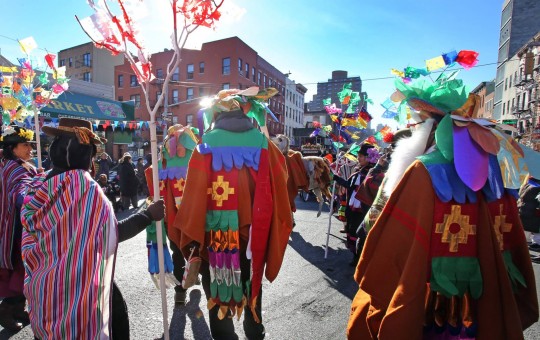
The report on arts resources, in particular, brings all of the cultures and traditions and personalities of New Hanover County to life. It reveals a varied history of organized cultural events at the town’s oldest theater, Thalian Hall, originally built in 1759. It also turned up an incredibly rich African American cultural history, from Jonkunnu “carnival”-style festivals, to young black women who were pioneers in vaudeville and opera, to gospel music and the new “holy hip hop” genre. The area is not only known for bluegrass, but duranguense, the Mexican version of country western music. There is a large Latino population in New Hanover County (many from the province of Oaxaca) who celebrate traditional holidays such as Tres Reyes or “Three Kings,” and still engage in traditional arts forms such as painting and embroidery. Being a coastal town, residents are experts in boatmaking and oyster-shucking. And  it’s not just traditional southern food that’s served here—the diversity of the community means that Latino (especially Oaxacan) and Greek food are also available. Finally, over the last forty years, Wilmington has become a popular place in the film industry because of its variety of architecture, locations, and low cost of doing business.

The public survey results reveal some overarching themes. Wilmington is attractive to creative workers due to its existing local arts scene, affordability, and proximity to water (both the ocean and the river), which many artists cite as inspirational to their work.  The city faces challenges, however. While Wilmington is a haven for early and late career artists, it loses mid-career artists who have to move away to find work. In addition, being a small community with limited resources, artists and organizations openly admit to struggling with competing amongst themselves instead of working together.  Residents have clear ideas of what they want an arts council to accomplish for the city. They believe that their arts assets are economic assets, but that they haven’t fully been realized as such. They want an arts council that can turn their local culture into dollars for the city. The survey also reveals a strong desire for public art in the city.

The recommendation report pulls everything together into a guidebook for what the new arts council should look like and how it should function. Incorporating feedback from the interviews and the survey, it advises that the arts council should concentrate on three core areas: securing funding, recruiting experienced staff, and building relationships both within the arts community and with other key stakeholders. It also recommends to “strike while the iron is hot” by forming a council within the next year and a half.  It provides a set of beliefs to guide the new council, as well as a budget for the first year.

The Benefits

Wayne Martin, Senior Program Director for Community Arts Development at the North Carolina Arts Council, explains the benefits that came from using folklorists in this project.

  • Authenticity

“By having folklorists trained in interviewing, we got some really eloquent statements that we were able to quote exactly. The results of the research were in the words of residents, which was a different tone than when other consultants would come in and write about a place. We were confident that the assets they reported on were valued by those in the community, lending an air of authenticity and connection we hadn’t had from other reports.”

  • Community Engagement

“The work itself was a great community engagement tool. The interviews and conversations engaged the community at a deeper level than other projects.”

  • Identifying artists outside the infrastructure

“Folklorists are trained to seek out and recognize creativity in a variety of forms. While it’s easier to just engage with artists and arts organizations, you leave out a big segment of the community who can bring a lot of depth in terms of artistic assets.”

  • Identifying Community Culture

“Folklorists understand how artistry is a window onto a community. They are able to articulate how the art that is produced there reflects the values of that community and makes it distinct.”

Moving Forward

After a two year process and eight months of research funded by a $15,000 contract, an arts council for Wilmington and New Hanover County is around the corner. The city has already agreed to appropriate funds for the council if the county takes the first step.  This month, there will be a County Commission meeting to decide that.

Folklorists aren’t usually asked to conduct this kind of cultural asset research, but the method shows great promise. Mr. Martin says that the North Carolina Arts Council has already shared their work on this project with their counterparts in Kentucky and adds that they would be happy to share with others.

Imagine the possibilities, though—what else can folklorists help us with? Stay tuned for more about how folklorist research can interact with more than just traditional arts, and can become a tool for cultural advocacy, tourism and business councils, and region-specific grantmaking institutions.

Special thanks to Wayne Martin and Sarah Bryan for their help in preparing this post.


Share
1 Comment

Around the horn: Japan edition

(OK, here’s the follow-up. Enjoy!)

TALKS AND SPEECHES YOU MISSED

  • Marc Vogl and Jeanne Sakamoto of the Hewlett and Irvine Foundations, respectively, hosted a Grantmakers in the Arts webinar on the subject of retaining emerging leaders in the arts field. Here is the full 40-minute presentation, and Marc and Jeanne have also put together a NextGen Arts Leadership microsite with other resources on wikispaces.
  • Andrew Taylor gave this keynote at the Arts Enterprise Summit in Kansas City last month called “The Art of the Business Model.” And he had a co-keynote with the wonderful Russell Willis Taylor at American University’s Spring Colloquium, which you can view here.
  • Nina Simon’s keynote from the 2010 NODEM conference on design for participation.

THE LETTER OF THE LAW

PUBLISHING AND THE ACADEMY

SUPPLY AND DEMAND

TRENDS AND THOUGHT PIECES

  • We focus a lot of attention on using arts and culture to reframe urban life. But what about the suburbs? Yonah Freemark imagines a more sustainable suburbia.
  • Doug McLennan writes of the walled garden problem and the economic incentives for new technologies not to adhere to the open-standards practices that have helped us make so much technological progress over the past couple of decades.
  • Crowd-curation marches on, this time at museums.

PARTNERSHIPS, MERGERS, AND EXPANSIONS

  • CultureBot’s Jeremy Barker marks the public debut of New York Live Arts, the new company formed by the merger of Bill T. Jones/Arnie Zane Dance Company and Dance Theater Workshop.
  • Not a merger, but this collaboration between fellow Lincoln Center tenants the Metropolitan Opera and Juilliard does beg the question of why it didn’t happen sooner.
  • More on the Awesome Foundation’s, uh, awesome growth.

PLANNING AND EVALUATION

  • GiveWell describes an interesting method for self-evaluation: giving an independent observer a chunk of money to allocate using GiveWell and other sources, and testing how useful GiveWell was in the process. It’s kind of like a lab experiment for smart giving.
  • The Center for Effective Philanthropy has released its strategic plan for 2011-14.

NEW PROJECTS AND RESOURCES

  • Foundation Source Access is a new fundraising website from Foundation Source, a company providing back-end services to many small family foundations. While at first glance it might seem redundant with other types of crowdfunding sites aimed at individual donors, this project is interesting because of the audience. The huge national foundations don’t control all that much of the nation’s institutional giving, but it’s always been difficult to tap family foundation money without personal connections because of those organizations’ lack of infrastructure. If family foundations actually use this tool to seek out grantees instead of sticking with the tried and true (and that’s a big if), it could be an important new resource for fundraisers.
  • Craig Newmark (founder of Craigslist) is launching craigconnects, a project to curate nonprofits and get them wider attention.
  • TicketForce is looking to sell tickets to your Facebook events…in Facebook. (Thanks to Thomas Cott for the above two links.)
  • Travel search engine Hipmunk has a new mapping overlay feature for its hotel searches. You can now see heat maps of food, shopping, tourist opportunities, and “vice” in the area around your hotel. I tried it out in my own neighborhood and found the data a bit suspect, but it’s still an interesting and very practical application of cultural asset mapping.
  • The International Federation of Arts Councils and Culture Agencies has a cool new resource called “Ask IFACCA.” Not only will they take your questions, they’ll publish some of the answers as well. Geek out alert!
  • Great to see the DiMenna Center for Classical Music (new home of Orchestra of St. Luke’s) up and running in Manhattan, especially since the genesis of the project was a 2004 feasibility study by Exploring the Metropolis.
Share
1 Comment